
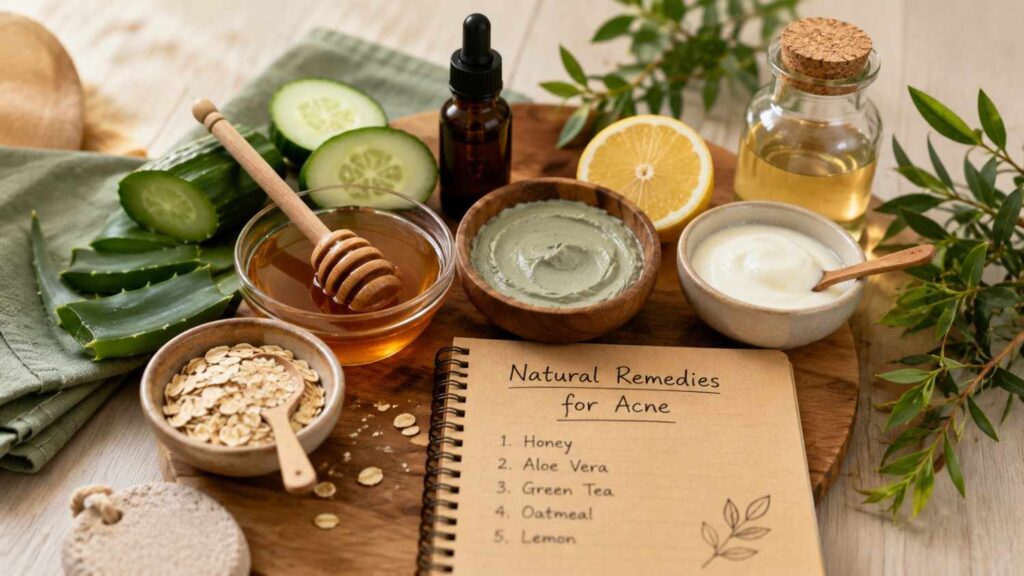
Top 5 Natural Remedies for Acne: What Actually Helps?
The top 5 natural remedies for acne may offer useful supportive care for people with mild breakouts, but they should be evaluated with the same care as conventional skin-care products. A remedy can come from a plant or nutrient and still be ineffective, irritating, allergenic, unstable, or unsuitable for a particular acne type.
Acne develops when hair follicles become blocked by oil and dead skin cells and then become inflamed. It may appear as blackheads, whiteheads, papules, pustules, nodules, or cysts. These lesions do not all respond to the same approach. A product that calms redness may not unclog pores, while a dietary change may not control deep hormonal breakouts.
Natural options may influence inflammation, oil production, skin comfort, dietary glycemic load, or nutritional status. However, the evidence supporting these options is generally more limited than the evidence for established topical and oral acne medicines. Current AAD guidelines strongly support treatments such as benzoyl peroxide and topical retinoids and provide additional recommendations for salicylic acid, azelaic acid, antibiotics, hormonal therapy, and isotretinoin in appropriate cases.
A reliable home routine remains important. Dermatologists recommend gentle cleansing, non-comedogenic products, consistent treatment, sunscreen, and avoiding picking or squeezing. Frequently changing products or aggressively scrubbing the skin can increase irritation and make acne more difficult to manage.
Deep, painful, scarring, persistent, or widespread acne requires professional assessment. Pregnancy also changes which skin-care and acne treatments may be appropriate, so products and supplements should be reviewed with an obstetrician or dermatologist.
What to Know Before Trying Natural Acne Remedies
Before applying a botanical product or changing your diet, identify the type, severity, and location of your acne. Occasional small pimples may be suitable for cautious self-care. Numerous blackheads, persistent inflammatory lesions, painful nodules, cysts, scarring, or widespread body acne usually need a more structured treatment plan.
Evaluate the complete formulation rather than focusing only on one featured ingredient. A product may advertise aloe vera or green tea while also containing fragrance, drying alcohol, heavy oils, or other ingredients that irritate the skin. Terms such as “non-comedogenic,” “oil-free,” or “won’t clog pores” are useful starting points, although they cannot guarantee that every user will tolerate a product.
Introduce one change at a time. Starting tea tree oil, aloe vera, a green tea serum, a new cleanser, a scrub, and a supplement during the same week makes it impossible to know what caused improvement or irritation.
Natural acne remedies also require patience. AAD guidance advises using an appropriate acne treatment consistently for about six to eight weeks before judging early improvement. Changing products every few days can irritate the skin and interrupt progress.
The table below compares the five options according to their potential role, evidence, and principal precautions.
| Option | Potential Role | Evidence Level | Main Precaution |
|---|---|---|---|
| Formulated tea tree oil | May reduce some mild inflammatory lesions | Limited | May cause redness, dryness, or allergic irritation |
| Topical green tea extract | May reduce inflammatory lesion counts | Limited but promising | Use a stable, non-irritating formulation |
| Aloe vera gel | May soothe irritation as an add-on | Limited | Not established as a reliable stand-alone therapy |
| Low-glycemic eating pattern | May modestly help selected people | Mixed or modest | Avoid unnecessary food restriction |
| Zinc | May help some inflammatory papules | Limited | Supplements can cause toxicity and medicine interactions |
Natural Does Not Mean Harmless
Natural products can produce real biological effects, which means they can also produce adverse effects. Essential oils are concentrated mixtures rather than mild plant waters. Applying them directly to inflamed or damaged skin can cause burning, scaling, redness, itching, or allergic contact dermatitis.
Tea tree oil should never be swallowed. NCCIH reports that oral ingestion can cause serious symptoms, including confusion, unsteadiness, inability to walk, and coma. Topical products may cause irritation, and older or oxidized oil may be more likely to trigger a skin reaction.
Homemade remedies introduce further uncertainty. Their acidity, concentration, cleanliness, stability, and storage conditions are not controlled. Lemon juice can irritate the skin and may create sun-related reactions. Toothpaste contains ingredients designed for teeth rather than inflamed facial skin. Undiluted vinegar and baking soda can disturb the skin barrier.
Use a commercially formulated and clearly labelled product rather than mixing concentrated essential oils yourself. Follow the manufacturer’s directions instead of assuming that a stronger mixture will work faster.
Patch-test new topical products and stop if persistent burning, swelling, blistering, intense itching, or spreading redness occurs. Severe reactions require appropriate medical attention.
When Home Care Is Not Enough
Professional evaluation is important when acne is painful, deep, widespread, persistent, or leaving scars. Nodules and cysts develop deeper within the skin than ordinary whiteheads or small pimples. These lesions can produce permanent scarring and generally require treatment that reaches the underlying process more effectively than a soothing gel or botanical serum.
AAD guidance recommends seeing a dermatologist for large, painful pimples that sit deep in the skin or acne that leaves scars. Professional treatment can address existing lesions, reduce the formation of new breakouts, and lower the risk of long-term marks.
A dermatologist can also determine whether the condition is truly acne. Folliculitis, rosacea, perioral dermatitis, hidradenitis suppurativa, medication reactions, and other skin conditions can resemble breakouts while requiring different care.
Seek professional help when acne suddenly becomes severe, appears with other hormonal symptoms, covers the chest or back extensively, or fails to improve after several months of consistent care. Emotional impact also matters. Acne that affects confidence, social activity, school, work, or mental well-being deserves attention even when the physical lesions appear moderate.
Pregnant or breastfeeding readers should review topical products, essential oils, and supplements with a qualified clinician before beginning a new routine.
Topical Natural Remedies for Acne
Topical remedies are applied directly to acne-prone skin. Among the many natural ingredients promoted online, tea tree oil and topical green tea extract have some of the most relevant human research. Aloe vera has also been studied, although mainly as a supportive ingredient used alongside a proven topical medicine.
Formulation is essential. A standardized gel, lotion, or serum is not equivalent to a fresh plant leaf, concentrated essential oil, hot tea bag, or homemade kitchen mixture. A professionally formulated product can control concentration, stability, preservation, and skin feel more reliably.
The vehicle also affects tolerability. A helpful botanical ingredient can still be delivered in a fragranced, oily, or alcohol-heavy base that worsens dryness or clogs pores. Read the complete ingredient list and select products labelled non-comedogenic where possible.
Introduce only one topical remedy initially. Apply it exactly as directed and avoid the eyes, lips, nostrils, broken skin, and severely irritated areas. Using larger quantities or applying the product more frequently does not guarantee better results.
Natural topical products should fit into a gentle routine rather than replace it. Cleanse without scrubbing, moisturize when needed, and use non-comedogenic sunscreen. Excessive dryness can increase discomfort and make it difficult to continue any acne treatment.
The following sections explain what the research says about tea tree oil, green tea extract, and aloe vera, along with the limitations that should guide realistic expectations.
| Acne Type | Best Natural Option | Why It May Help | Important Note |
|---|---|---|---|
| Mild inflammatory pimples | Formulated Tea Tree Oil | May reduce inflammation and acne-causing bacteria | Patch test before use |
| Red, irritated acne | Aloe Vera Gel | Helps soothe irritated skin and supports the skin barrier | Best used alongside proven acne treatments |
| Oily, acne-prone skin | Topical Green Tea Extract | May help reduce excess sebum and inflammation | Choose an alcohol-free formulation |
| Diet-related breakouts | Low-Glycemic Eating Pattern | May reduce acne triggers linked to blood sugar spikes | Results vary between individuals |
| Acne with possible nutrient deficiency | Zinc-Rich Foods or Clinician-Guided Supplements | Supports immune function and healthy skin | Avoid excessive supplementation |
1. Tea Tree Oil
Tea tree oil is produced from the leaves of Melaleuca alternifolia. It has been investigated for acne because laboratory studies suggest antimicrobial and anti-inflammatory activity, while a small number of clinical studies have reported reductions in lesion counts.
NCCIH states that a small amount of evidence suggests topical tea tree oil might help acne, but more research is required before firm conclusions can be made. Reviews of complementary therapies have described the supporting evidence as limited or low quality.
Choose a professionally formulated acne gel or lotion rather than applying pure essential oil. The concentration, vehicle, storage, and complete ingredient list all influence how the product behaves on the skin.
Patch-test first and begin according to the label. Tea tree oil may be more relevant to mild inflammatory pimples than widespread blackheads, deep nodules, cysts, or recurring hormonal acne.
Stop using the product if it causes persistent burning, intense dryness, itching, swelling, or a spreading rash. Never swallow tea tree oil, and store it where children and pets cannot reach it.
Tea tree oil should be viewed as an optional mild-acne aid, not a substitute for professional care or stronger evidence-based therapy.
2. Topical Green Tea Extract
Green tea comes from Camellia sinensis and contains polyphenols such as epigallocatechin gallate. Researchers have examined topical green tea extract because of its possible anti-inflammatory, antioxidant, and sebum-related effects.
A systematic review and meta-analysis covering five randomized studies found that green tea extract reduced inflammatory acne lesions. Subgroup analysis suggested that topical application produced a larger effect than oral green tea, which had only limited impact. The authors still called for further high-quality trials.
This evidence applies to formulated topical extracts used in research. It does not establish that placing wet tea bags on the face or applying homemade brewed tea will produce the same concentration, stability, penetration, cleanliness, or outcome.
Look for a non-comedogenic, fragrance-free, and alcohol-free serum or lotion when possible. Introduce it separately from acids, retinoids, essential oils, or other potentially irritating products.
Green tea extract may help reduce some inflammation, but it should not be assumed to unclog pores as effectively as a retinoid or salicylic acid. It also cannot be expected to treat deep nodular or cystic acne.
Patch-test before regular use and discontinue the product if stinging, rash, persistent redness, or worsening breakouts develop.
3. Aloe Vera as a Supporting Ingredient
Aloe vera is widely used in gels, moisturizers, and after-sun products because it can provide a cooling or soothing skin feel. Its most relevant acne evidence comes from a small randomized trial in which aloe vera gel was combined with topical tretinoin.
The eight-week study included 60 participants with mild to moderate acne. The tretinoin-and-aloe combination reduced inflammatory, non-inflammatory, and total lesion scores more than tretinoin with a vehicle. Redness was also less severe in the aloe group.
This result does not establish aloe vera as an effective stand-alone acne treatment. The study evaluated aloe as part of a combination containing tretinoin, an established topical retinoid.
Aloe may be most useful as a supportive ingredient when an acne routine causes mild dryness or discomfort. Choose a simple, non-comedogenic, fragrance-free formula. Some products marketed as aloe gels contain alcohol, added perfume, dyes, oils, or sticky film-forming ingredients that may not suit acne-prone skin.
Using gel taken directly from a household plant introduces questions about cleanliness, latex-containing parts of the leaf, stability, and allergy. A finished product with a clear ingredient list is generally easier to evaluate.
Patch-test before broad use and stop if itching, swelling, or rash occurs.
Related Articles
Diet and Nutrient-Based Natural Remedies
Diet and nutritional status may influence acne in some people, but they do not explain every case. Genetics, hormones, pore blockage, skin products, medicines, inflammation, stress, and individual sensitivity can all contribute.
The most studied dietary question involves glycemic index and glycemic load. These measures describe how carbohydrate-containing foods affect blood glucose. Research has also examined dairy, although findings are mixed and may vary according to population, sex, dietary pattern, and type of dairy product.
Zinc has been investigated because it is involved in immune function, wound healing, inflammation, and normal skin biology. Some acne studies report lower zinc levels or improvements in inflammatory lesions after zinc treatment. However, the evidence does not justify unsupervised high-dose supplementation.
Food-based changes are generally safer than aggressive restriction or multiple supplements. A balanced eating pattern can support general health while allowing readers to observe whether particular dietary habits seem connected to their breakouts.
No diet should be promoted as an acne cure. Even when a dietary pattern helps, suitable topical or medical treatment may still be necessary. AAD guidelines currently consider the evidence insufficient for formal dietary recommendations as primary acne treatment.
The goal is to make measured, nutritionally sound changes rather than eliminating entire food groups based on social-media testimonials. Readers with medical conditions, eating-disorder history, pregnancy, growth needs, or complex nutritional concerns should seek qualified dietary guidance.
4. A Low-Glycemic Eating Pattern
High-glycemic foods are digested or absorbed in ways that can raise blood glucose relatively quickly. Common examples include sugary drinks, sweets, some refined cereals, pastries, and large portions of highly processed carbohydrates.
A systematic review of diet and acne found that higher glycemic index, glycemic load, and carbohydrate intake had a modest association with acne development or severity. The review also emphasized that dietary effects may differ according to population characteristics and that additional randomized research is needed.
A 12-week randomized trial involving 43 males aged 15 to 25 found a greater reduction in total acne lesions in the low-glycemic-load group than in the control group. However, the intervention also produced weight loss and metabolic changes, making it difficult to isolate the effect of glycemic load alone.
A balanced approach may emphasize vegetables, beans, minimally processed whole grains, nuts, seeds, and regular meals while reducing frequent sugary drinks and highly refined snacks.
Do not remove carbohydrates entirely or follow an extreme diet. Keep a simple food-and-skin diary if you suspect a pattern, and evaluate changes over several weeks rather than blaming one meal.
Diet may support acne management, but it rarely replaces appropriate skin care or medication.
If you’re interested in how nutrition may influence breakouts beyond glycemic load, this summary of diet and acne research reviews several lifestyle approaches while emphasizing that evidence varies between remedies.
5. Zinc From Food or Clinician-Guided Supplements
Zinc is an essential mineral found in foods such as meat, seafood, dairy products, beans, nuts, seeds, and fortified grains. It contributes to immune function, protein synthesis, wound healing, and many cellular processes.
A systematic review and meta-analysis found that people with acne had lower average serum zinc levels than controls and that zinc treatment was associated with improvement in inflammatory papule counts. The authors also noted that definitive evidence for acne treatment had previously been limited.
Food sources are the safest starting point for most people. Supplements should be considered carefully because zinc can cause nausea, vomiting, loss of appetite, headaches, and longer-term copper deficiency when excessive amounts are taken.
The NIH Office of Dietary Supplements lists a tolerable upper intake level of 40 milligrams per day for adults and 34 milligrams for teenagers aged 14 to 18, counting intake from food, supplements, and medicines. These limits do not apply to medically supervised treatment.
Zinc can interact with quinolone and tetracycline antibiotics, including medicines that may be prescribed for acne. Timing and dosage should therefore be reviewed with a doctor or pharmacist.
Avoid combining multivitamins, individual zinc tablets, and acne supplements without calculating the total amount.
Popular Remedies That Are Better Avoided
Several popular home remedies have weak supporting evidence and a meaningful risk of irritation. These include toothpaste, lemon or lime juice, undiluted apple cider vinegar, baking soda, rubbing alcohol, undiluted essential oils, and rough sugar or salt scrubs.
Toothpaste is designed to clean teeth rather than treat inflamed facial skin. Its flavouring agents, detergents, whitening ingredients, and abrasives may irritate or dry the skin without addressing acne’s underlying mechanisms.
Lemon and lime juice are acidic and can disrupt the skin barrier. Certain citrus-derived oils can also increase harmful reactions when skin is exposed to sunlight. The FDA specifically warns that plant-derived ingredients may be irritating or photoreactive even when they are safe in food.
Baking soda is strongly alkaline compared with the skin’s natural surface environment. Vinegar concentrations in homemade mixtures are inconsistent. Rough scrubs can increase inflammation and cause small surface injuries.
Picking and squeezing should also be avoided. AAD guidance explains that manipulating lesions can delay clearing and increase the risk of scarring and post-inflammatory hyperpigmentation.
Honey, turmeric, chamomile, and similar ingredients may sound gentle, but convincing acne evidence remains insufficient. Lack of evidence does not prove that every preparation is harmful; it means dependable benefits cannot be promised.
For a broader evidence-based overview of commonly used home acne remedies, it can be helpful to compare which options have clinical support and which are mainly based on anecdotal claims.
How to Use Natural Acne Remedies Safely
A safe natural-acne routine should protect the skin barrier, minimize unnecessary variables, and make it easy to identify what is helping or causing irritation.
Begin with a gentle cleanser, a non-comedogenic moisturizer, and broad-spectrum sunscreen. Add only one remedy or treatment. Keep the remainder of the routine stable for several weeks.
Avoid repeatedly washing or scrubbing. Dermatologists recommend gentle cleansing rather than trying to “clean out” acne through friction. Acne does not mean the skin is dirty, and aggressive washing can worsen irritation. AAD guidance also recommends choosing oil-free or non-comedogenic skin-care, sunscreen, and cosmetic products.
Apply each product according to its label. Using twice the amount or combining several active ingredients usually increases irritation rather than speeding results.
Allow enough time for evaluation. Early improvement may require six to eight weeks, and complete clearing can take longer. Stop sooner when a product causes a concerning reaction.
Natural remedies should not delay appropriate treatment for painful, scarring, or persistent acne. A dermatologist can combine effective treatments, adjust them for sensitive skin, and address post-acne discoloration or scarring.
The following steps provide a practical system for testing a remedy while maintaining a gentle routine and recognizing when the experiment should end.
| Recommended Habit | Common Mistake to Avoid | Why It Matters |
|---|---|---|
| Patch-test every new product | Applying a product to the entire face immediately | Helps reduce the risk of allergic reactions and irritation |
| Introduce one remedy at a time | Using multiple new products together | Makes it easier to identify what works or causes irritation |
| Use non-comedogenic skincare | Choosing products with pore-clogging ingredients | Helps prevent additional breakouts |
| Follow product directions consistently | Applying excessive amounts for faster results | More product increases irritation, not effectiveness |
| Give treatments 6–8 weeks | Switching products every few days | Acne treatments need consistent use before results become noticeable |
Patch-Test and Add One Product at a Time
A patch test involves applying a small amount of a new product to a limited area before using it across the entire acne-prone region. This cannot guarantee that delayed irritation will never occur, but it may reveal an immediate reaction.
Follow the product directions because different formulas have different exposure instructions. Do not patch-test concentrated essential oil that the manufacturer did not design for direct skin use.
Observe the area for persistent redness, itching, swelling, burning, rash, blistering, peeling, or unusual tenderness. People with eczema, highly reactive skin, fragrance allergy, or previous contact dermatitis should be especially cautious.
After the initial test, introduce the product gradually. Do not add a second botanical serum, acid, retinoid, scrub, mask, and supplement during the same week. A simple routine makes it easier to identify the cause of any reaction.
Use only the directed amount. A thin layer is often enough for a topical product. More product increases exposure but does not necessarily improve acne.
Essential oils should remain away from the eyes, lips, nostrils, and broken skin. Tea tree oil must never be swallowed. Severe swelling, breathing difficulty, widespread hives, or eye involvement requires urgent medical attention.
Maintain a Gentle Acne-Friendly Routine
A dependable acne routine does not need many steps. Wash with a mild, non-abrasive cleanser, use an appropriate treatment or selected natural product, apply a non-comedogenic moisturizer when needed, and protect exposed skin with sunscreen.
Use fingertips rather than rough washcloths, brushes, or abrasive cleansing tools. Scrubbing does not remove acne faster and may worsen redness, dryness, and discomfort.
Moisturizing is important when treatment dries the skin. Excessive dryness can weaken comfort and make people stop using effective products. Look for an oil-free or non-comedogenic moisturizer designed for acne-prone or sensitive skin.
Sunscreen helps protect the skin and may reduce the worsening of post-inflammatory dark marks. AAD recommends broad-spectrum, water-resistant sunscreen with SPF 30 or higher and advises selecting a formula labelled non-comedogenic or “won’t clog pores.”
Avoid switching products repeatedly. Use the selected routine consistently for approximately six to eight weeks unless irritation develops.
Keep hair products, heavy pomades, and oily cosmetics away from acne-prone areas where possible. Wash after sweating and remove makeup before sleeping.
The routine should remain comfortable enough to follow every day.
Track Progress and Know When to Stop
Acne naturally fluctuates, so a single clear or difficult day does not prove whether a remedy works. Use a consistent method to evaluate progress.
Take one photograph each week in similar lighting, from the same angle, and without filters. Record the number or general pattern of new inflammatory pimples, blackheads, whiteheads, dryness, redness, itching, and pain.
Keep other parts of the routine stable. Note menstrual-cycle changes, major stress, medicine changes, illness, or new hair and cosmetic products that might affect breakouts.
Evaluate the remedy over six to eight weeks when it remains comfortable. Stop earlier if you develop persistent burning, swelling, blisters, severe peeling, an itchy rash, cracking, or rapidly worsening inflammation.
Seek dermatology care when lesions become deeper or more painful, when scars appear, or when a careful routine produces little improvement after several months. Deep acne often requires prescription treatment to reduce the chance of permanent scarring.
Tracking should simplify decisions rather than create anxiety. The goal is not to inspect every pore each day. It is to determine whether the overall pattern is improving, stable, worsening, or becoming too irritating to continue.
Quick Answer About Top 5 Natural Remedies for Acne
The five natural options with the most reasonable, although still limited, evidence are formulated tea tree oil, topical green tea extract, aloe vera used as a soothing addition, a balanced low-glycemic eating pattern, and food-first zinc intake or clinician-guided supplementation.
Tea tree oil and topical green tea may reduce some inflammatory lesions. Aloe vera has mainly been studied as an addition to standard topical treatment rather than as an independent cure. Dietary glycemic load may influence breakouts in some people, while zinc may help certain inflammatory lesions but can cause harm when supplements are taken carelessly.
These options are best suited to supportive care for mild acne. They should not replace established treatment for painful, widespread, nodular, cystic, persistent, or scarring acne. Natural ingredients can still cause irritation, allergy, medicine interactions, or nutritional problems. The safest strategy is to introduce one change at a time, follow product directions, protect the skin barrier, and seek dermatology care when warning signs appear.
What the Five Options Can and Cannot Do
These five approaches may support the management of mild breakouts, but they work through different pathways and should not be treated as interchangeable. Tea tree oil and green tea extract are topical ingredients studied mainly for inflammatory lesions. Aloe vera may soothe irritation or improve tolerability when combined with another treatment. Dietary changes and zinc affect the body more broadly and require a different type of risk assessment.
None of these options has enough evidence to be described as a guaranteed replacement for benzoyl peroxide, topical retinoids, salicylic acid, azelaic acid, hormonal treatment, antibiotics, or isotretinoin. The American Academy of Dermatology’s current guidelines strongly recommend several conventional therapies, while available evidence remains insufficient for formal recommendations supporting dietary changes, vitamins, or plant-based products as primary acne treatments.
Results also depend on acne type. Blackheads and whiteheads involve clogged pores, while papules and pustules involve more inflammation. Deep nodules and cysts develop below the surface and carry a greater scarring risk. A natural topical product that slightly reduces redness may do little to prevent deep lesions or recurring hormonal acne.
Why Evidence and Safety Matter
The word “natural” describes an ingredient’s origin, not its effectiveness, purity, concentration, or safety. Plant-derived substances contain active chemicals, and some can irritate the skin, trigger allergic contact dermatitis, or become less stable after exposure to heat, air, and light.
The FDA warns that ingredients marketed as natural or organic are not automatically safe. Essential oils and other plant ingredients can contain substances that are toxic, irritating, allergenic, or capable of increasing sun-related skin reactions. Cosmetic ingredients must meet the same safety expectations regardless of whether they are synthetic or plant-derived.
Research quality matters just as much. Small trials may use a specific concentration and professionally prepared formula that cannot be reproduced by applying a raw plant, kitchen mixture, or concentrated essential oil at home. A result from one product cannot automatically be applied to every serum, gel, supplement, or homemade recipe containing the same headline ingredient.
NCCIH concludes that complementary acne therapies have limited supporting evidence and that many studies have methodological weaknesses. Tea tree oil has shown some promise, but the available evidence is not strong enough to support broad recommendations.
Frequently Asked Questions About Top 5 Natural Remedies for Acne
Natural acne care raises questions about effectiveness, treatment time, sensitive skin, diet, supplements, and professional treatment. The answers require more nuance than simply naming one ingredient.
No natural remedy works best for every acne type. Tea tree oil and green tea extract have some evidence for mild inflammatory lesions, but the research remains limited. Aloe vera may support comfort when used with another treatment. Diet and zinc may affect selected people but involve individual nutritional and health factors.
Acne severity also changes the answer. Mild surface-level breakouts may be suitable for cautious self-care. Deep nodules, cysts, scarring, and widespread acne should not be managed through repeated home experiments.
Sensitive skin requires additional care. A product marketed as herbal can still contain fragrance, alcohol, essential oils, or preservatives that trigger irritation. People should evaluate the complete formula rather than assuming the main botanical ingredient makes it gentle.
Time is another important factor. Acne treatment generally works over weeks rather than overnight. Frequently switching products can make the skin more irritated while preventing a fair assessment.
The following answers summarize the most common questions while maintaining realistic expectations. They do not replace diagnosis or individualized treatment from a qualified healthcare professional.
Which Natural Remedy Is Best for Acne?
There is no single natural remedy that is best for every person or acne type. Tea tree oil has some of the most recognized evidence among botanical options, but NCCIH describes the supporting research as limited and states that more studies are needed.
Topical green tea extract is another promising option. A meta-analysis found reductions in inflammatory lesion counts, with topical preparations showing more benefit than oral green tea.
Aloe vera is better understood as a soothing supporting ingredient because its most relevant trial combined it with tretinoin. Diet and zinc involve broader health considerations and should not be selected only because a supplement or restrictive diet is marketed for clear skin.
The most suitable option depends on lesion type, sensitivity, current products, medicines, pregnancy status, and acne severity. Mild inflammatory pimples may justify testing one formulated topical product. Blackheads, hormonal acne, cysts, or scarring often require other treatments.
Professional care is the better choice when acne is painful, deep, persistent, widespread, or affecting quality of life.
How Long Do Natural Acne Remedies Take to Work?
Natural acne remedies do not produce reliable overnight results. When a topical product is comfortable and appropriate, allow approximately six to eight weeks to assess early improvement. AAD guidance uses a similar time frame for evaluating acne products generally.
Take photographs under consistent conditions and look at the overall pattern of new lesions. One pimple disappearing does not prove the remedy worked, just as one new breakout does not prove complete failure.
Dietary changes may also require several weeks before a pattern becomes clear. They should be balanced and consistent rather than extreme.
Stop sooner if the product causes burning, swelling, blistering, severe peeling, or a spreading itchy rash. Continuing through a significant reaction can damage the skin barrier.
Do not introduce several remedies at once. Multiple simultaneous changes make it impossible to identify the cause of improvement or irritation.
When a consistent routine has produced no meaningful improvement after several months, or when acne becomes painful or begins to scar, seek professional treatment rather than continuing a long series of home experiments.
Can Aloe Vera Clear Acne by Itself?
Current evidence does not establish aloe vera as a dependable stand-alone acne treatment. Its most relevant clinical trial evaluated aloe vera gel in combination with topical tretinoin rather than aloe alone.
In that trial, the aloe-and-tretinoin combination reduced inflammatory, non-inflammatory, and total lesion scores more than tretinoin with a vehicle. The combination also produced less severe redness.
This suggests that aloe vera may provide supportive or soothing value and possibly improve the tolerability of an established topical treatment. It does not prove that a basic aloe gel can independently prevent clogged pores, regulate hormones, or clear deep inflammatory acne.
Product quality matters. Some aloe gels contain fragrance, alcohol, colour, or heavy oils that may irritate or clog acne-prone skin. Choose a simple, non-comedogenic formulation and patch-test it.
Do not replace prescribed tretinoin or another effective treatment with aloe vera without discussing the change with the prescribing clinician.
Aloe may be helpful for mild dryness or discomfort, but worsening acne, nodules, cysts, or scarring requires a more effective treatment plan.
Can Diet Completely Cure Acne?
No single diet has been shown to cure acne. Research suggests that high glycemic index and glycemic load may modestly influence acne development or severity in some people, but the effect is not universal.
A low-glycemic eating pattern may help selected individuals, particularly when it replaces frequent sugary drinks and highly refined foods with balanced meals. However, acne also involves genetics, hormones, oil production, pore blockage, inflammation, skin products, and medicines.
Dietary studies can be difficult to interpret because changes in body weight, overall nutrition, insulin sensitivity, and other behaviours may occur at the same time. One trial showing improvement cannot establish that every person will respond identically.
Avoid eliminating dairy, gluten, carbohydrates, or other food groups without a clear reason. Restrictive diets can create nutritional problems and may be especially risky for teenagers, pregnant people, athletes, and individuals with eating-disorder history.
Use diet as one part of a complete acne plan. AAD notes that effective management generally still includes suitable skin care and medication when needed.
Is Zinc Safe for Teenage Acne?
Zinc is an essential nutrient, but high-dose supplementation is not automatically safe for teenagers. The tolerable upper intake level for ages 14 to 18 is 34 milligrams per day from food, drinks, supplements, and medicines combined, unless a clinician prescribes a different amount for medical treatment.
Excessive zinc can cause nausea, vomiting, headaches, stomach discomfort, reduced appetite, and long-term copper deficiency. It may also interfere with the absorption of tetracycline and quinolone antibiotics, including medicines that may be prescribed for acne.
Teenagers should begin with food sources such as meat, seafood, dairy products, beans, nuts, seeds, and fortified foods where appropriate.
A doctor, pharmacist, or qualified dietitian should review supplementation, particularly when the teenager takes prescription medicine, uses a multivitamin, has a restricted diet, or has a health condition.
Evidence suggests zinc may improve some inflammatory papules, but it is not a guaranteed acne cure.
More is not better. Avoid combining several supplements without calculating the total zinc dose.
When Should I See a Dermatologist?
See a dermatologist when acne is deep, painful, widespread, rapidly worsening, or leaving scars. Large lesions beneath the skin are more likely to cause permanent marks and often require prescription treatment.
Professional care is also appropriate when a consistent routine has not improved acne after several months, when breakouts affect the chest or back extensively, or when dark marks remain after most lesions.
Seek help sooner when acne affects confidence, relationships, school, work, or mental well-being. The emotional impact is a valid reason to request treatment.
Sudden adult acne accompanied by irregular periods, excess facial hair, hair loss, or other hormonal symptoms may require a broader medical assessment.
Pregnant, breastfeeding, or pregnancy-planning readers should review treatments and supplements with an obstetrician or dermatologist because some commonly used acne medicines are unsuitable.
A dermatologist can also distinguish acne from conditions that look similar. Accurate diagnosis prevents months of using products that address the wrong problem.
Early care may reduce new breakouts and lower the chance of permanent scarring.
Conclusion
The five natural options covered in this guide are formulated tea tree oil, topical green tea extract, aloe vera as a supportive ingredient, a balanced low-glycemic eating pattern, and food-first zinc intake or clinician-guided supplementation.
These options do not have equal evidence. Tea tree oil has a small and limited research base. Topical green tea extract has promising findings for inflammatory lesions. Aloe vera has mainly been studied alongside tretinoin. Low-glycemic eating may modestly help selected people, while zinc may improve some inflammatory papules but carries supplement-related risks.
A simple, gentle routine remains the foundation. Cleanse without scrubbing, use non-comedogenic products, moisturize as needed, apply sunscreen, and avoid picking or squeezing lesions.
Introduce one remedy at a time. Follow the label, patch-test topical products, and track the overall acne pattern for approximately six to eight weeks when the skin remains comfortable.
Do not apply undiluted essential oils, toothpaste, lemon juice, vinegar, baking soda, or abrasive scrubs. These methods can irritate the skin without treating acne effectively.
The top 5 natural remedies for acne should therefore be viewed as possible supportive measures rather than guaranteed cures. Painful, widespread, nodular, cystic, scarring, persistent, or pregnancy-related acne requires individualized professional guidance.
The Main Takeaway
Natural acne care should be evidence-aware, gentle, and realistic. A botanical ingredient may support the management of mild breakouts, but its natural origin does not prove that it is safe or effective.
The five options in this guide have different roles. Tea tree oil and green tea extract are topical choices with limited clinical evidence. Aloe vera may improve comfort as an add-on. Diet and zinc involve whole-body factors and require a balanced approach.
Prioritize a simple routine, one change at a time, patch testing, non-comedogenic products, consistent use, and realistic expectations.
Avoid aggressive homemade remedies. Irritation can weaken the skin barrier, increase redness, and make post-inflammatory discoloration more noticeable.
Do not continue a product simply because temporary stinging is described online as “working.” Persistent burning, swelling, blistering, or rash are warning signs.
The most useful remedy is one that has a reasonable evidence base, fits the acne type, causes no significant irritation, and does not delay effective medical treatment.
Natural options should complement good acne care, not create a complicated routine that is expensive, restrictive, or difficult to follow.
Your Best Next Action
Start by assessing your acne honestly. Mild acne may include a limited number of blackheads, whiteheads, and small inflammatory pimples. Deep painful lumps, cysts, scarring, or widespread lesions are signs that home remedies are unlikely to be enough.
Select one low-risk option that matches your situation. A person with mild inflammatory pimples might test a formulated tea tree oil or green tea product. Someone experiencing dryness from an existing treatment might consider a simple aloe-based moisturizer.
Keep the cleanser, moisturizer, sunscreen, diet, and other products stable while testing the new option. Take a baseline photograph and record irritation, new lesions, and overall comfort weekly.
Follow the product directions. Do not increase the amount or frequency because improvement feels slow.
Review progress after six to eight weeks when no significant irritation occurs. Stop sooner for burning, rash, swelling, blistering, or rapid worsening.
Schedule a dermatologist appointment when acne is painful, scarring, persistent, or affecting quality of life.
A careful decision process is more valuable than trying every remedy at once. Simplicity makes results easier to interpret and protects the skin from avoidable irritation.
