
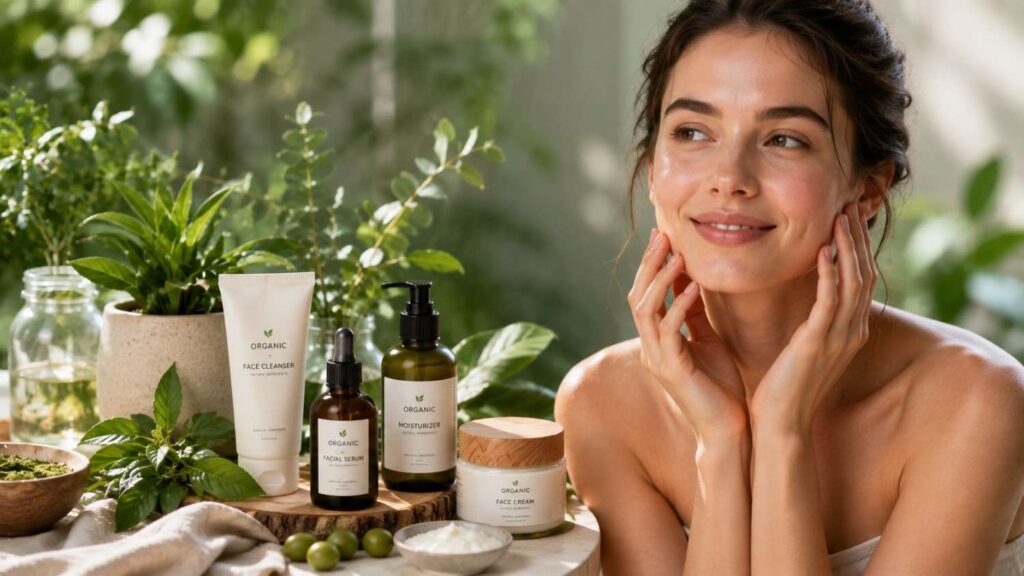
The Benefits of Using Organic Skincare Products: What Really Matters
Organic skincare is no longer limited to specialist beauty stores or niche natural-health brands. Moisturizers, serums, facial oils, cleansers, masks, lip products, and body-care formulas now commonly feature words such as “organic,” “natural,” “botanical,” “plant-based,” and “clean” on their packaging.
The difficulty is that these terms are often used as though they mean the same thing. They do not.
Understanding the benefits of using organic skincare products requires separating meaningful certification standards from attractive marketing language. A product may contain organically produced agricultural ingredients without automatically being better for every person, every skin type, or every concern. Similarly, a conventional formula is not automatically inferior simply because some of its ingredients are synthetically produced.
Skincare performance depends on the total formulation. Ingredient concentration, preservation, stability, delivery system, compatibility between ingredients, and the way the formula interacts with your skin all matter. A beautifully packaged organic moisturizer that does not adequately hydrate your skin is still a poor match for you, while a conventional moisturizer with well-studied ingredients may provide exactly the result you need.
Scientific research does support the potential value of numerous plant-derived topical ingredients. Botanical oils, extracts, antioxidants, and plant-based preparations have been studied for hydration, antioxidant activity, soothing properties, and other dermatological functions. However, research into a plant ingredient should not be confused with proof that “organic skincare” as an entire category always performs better.
That is why the most useful discussion is not about whether organic skincare is universally superior. It is about what organic certification genuinely tells you, where botanical formulations may offer value, what limitations consumers should understand, and how to choose a product based on both sourcing and skincare quality.
What Does Organic Skincare Actually Mean?
The term “organic skincare” sounds straightforward, but the regulatory reality is more detailed. Organic generally refers to the way qualifying agricultural ingredients are produced, processed, and certified. It does not automatically describe every ingredient in a cosmetic formula, nor does it provide a universal guarantee about skin compatibility, performance, or safety.
In the United States, the FDA regulates cosmetics under applicable cosmetic laws, but the FDA does not create the agricultural organic standards used for qualifying organic claims. Those standards are handled through the U.S. Department of Agriculture’s National Organic Program when eligible agricultural ingredients and products meet its requirements. Cosmetic products still need to comply with applicable FDA safety and labeling rules even when they carry organic claims.
This distinction is important because consumers often interpret organic as a broad promise that extends to everything about a product. In reality, certification primarily provides information about qualifying agricultural content and the standards used to produce it.
For example, a moisturizer may contain certified organic plant oils while also containing water, emulsifiers, stabilizers, preservatives, or other ingredients required to create a safe and functional cosmetic formula. That does not make the product misleading. It simply means skincare formulation is more complex than the front label may suggest.
Learning to identify recognized certifications and understand label wording allows consumers to make much more informed choices.
Certified Organic Is Different From Natural or Clean
“Natural,” “organic,” and “clean” frequently appear beside one another in beauty marketing, but consumers should not assume that they carry identical meanings or verification requirements.
In the United States, the FDA states that it has not established regulatory definitions for terms such as “natural” or “organic” under the cosmetic-labeling laws it administers. USDA organic standards, however, can apply to eligible agricultural ingredients in cosmetic and personal-care products when the necessary requirements are met.
This difference gives certified organic claims more specific meaning than a general phrase such as “inspired by nature” or “made with botanicals.”
Under USDA labeling rules, a multi-ingredient product represented simply as “organic” generally needs at least 95% certified organic content when water and salt are excluded from the calculation. Products described as “made with organic” follow a different threshold and labeling framework.
The term “clean beauty” is even less useful without additional explanation because different brands and retailers can define “clean” according to their own standards.
For practical shopping, I recommend treating descriptive words on the front of the package as a starting point rather than proof. Check whether the organic claim is supported by a recognized certification, review the ingredient list, and investigate what the certification actually guarantees.
A genuine certification gives you information about sourcing and production. Words such as “natural,” “pure,” or “green” may communicate a brand’s positioning, but they do not necessarily offer the same independent verification.
Certification Makes Organic Claims More Verifiable
One of the strongest practical advantages of certified organic skincare is accountability. Certification turns a broad marketing claim into something that must meet defined standards.
In the United States, USDA organic certification requires qualifying agricultural operations, ingredients, handling practices, and labeling to follow National Organic Program requirements. Certification therefore gives consumers a way to verify that certain organic claims are based on established rules rather than simply on packaging language.
International standards can provide similar guidance. COSMOS, for example, operates certification categories including COSMOS ORGANIC and COSMOS NATURAL. Those categories are not interchangeable, and certified products can display information that helps shoppers understand how the formula has been assessed.
This transparency is valuable because skincare marketing can otherwise be difficult to interpret. A product may use leaves, flowers, green packaging, and words associated with nature without being certified organic at all.
Certification does not answer every skincare question. It does not tell you whether the moisturizer is rich enough for very dry skin, whether a serum will irritate you, or whether a cleanser will work well for your routine. Those questions still require evaluation of the formula.
What certification does provide is a more reliable answer to a different question: “Were qualifying agricultural ingredients produced and handled according to a recognized organic standard?”
That distinction helps consumers evaluate organic claims accurately without expecting certification to function as a guarantee of dermatological performance.
Related Articles
What Are the Main Benefits of Organic Skincare Products?
The most credible benefits of organic skincare are more specific than many beauty advertisements suggest. Organic skincare should not be promoted as universally safer, completely free of pesticides, “chemical-free,” or automatically superior to conventional formulas. Those claims either oversimplify the evidence or misunderstand how cosmetics and chemistry work.
The meaningful benefits are linked mainly to ingredient sourcing, certification, transparency, agricultural standards, and the potential functions of plant-derived ingredients commonly used in organic formulations.
A well-designed certified organic moisturizer, for example, may combine botanical oils, plant extracts, humectants, and other ingredients to support hydration. The skincare benefit comes from how those ingredients function together. Organic certification adds another layer of information by telling the consumer something about how qualifying agricultural ingredients were grown and handled.
This combination can be valuable to shoppers who care about both skincare performance and sourcing practices.
The following table shows where organic skincare can provide meaningful advantages while also clarifying the limitations.
| Potential Benefit | What It Can Mean | Important Limitation |
|---|---|---|
| Verified sourcing | Certification follows defined production requirements | It does not guarantee superior performance |
| Botanical ingredients | Plant oils and extracts may provide useful skin functions | Plant-derived does not automatically mean organic |
| Moisturization | Some botanical oils and formulations can support hydration | Results depend on the formula |
| Antioxidant ingredients | Certain plant extracts contain antioxidant compounds | Stability and concentration matter |
| Environmental alignment | Organic standards include ecological priorities | Packaging and manufacturing also matter |
| Restricted agricultural inputs | Organic farming limits many prohibited synthetic substances | Organic farming is not completely pesticide-free |
| Consumer transparency | Third-party certification helps verify claims | Uncertified marketing terms provide less assurance |
Plant Ingredients Can Provide Useful Skin Functions
Many organic skincare formulas are built around botanical oils, butters, extracts, waxes, and other agricultural ingredients. These materials are not valuable simply because they come from plants; their usefulness depends on their chemical composition and how they function within the finished formula.
Scientific literature has examined numerous plant-derived ingredients for properties relevant to skincare, including moisturization, antioxidant activity, soothing effects, and support for the skin barrier. Reviews of botanical preparations suggest that certain plant extracts and plant-based topical products may contribute to hydration and other measurable skin outcomes.
For example, some plant oils contain fatty acids that can help soften the skin and support the emollient function of a moisturizer. Botanical extracts may contain antioxidant compounds, while plant-derived butters can help improve the feel and richness of a formula.
The key point is that these benefits come from specific ingredients and formulations rather than from the word “organic” itself.
An organically grown plant extract does not automatically become more effective than a conventionally grown version. Likewise, the presence of a popular botanical ingredient does not prove that the formula contains a useful concentration or that the ingredient remains stable throughout the product’s shelf life.
Consumers should therefore look at organic status and skincare function separately. Certification can tell you about how a qualifying ingredient was produced. Ingredient research and formulation quality tell you more about what that ingredient may actually do when applied to the skin.
| Certification Standard | Primary Purpose | Organic Content Requirement | Verification Benefit | Best For Consumers Who Want |
|---|---|---|---|---|
| USDA Organic | Regulates qualifying agricultural ingredients in cosmetics | Typically 95% certified organic content (excluding water and salt) for “Organic” claims | Third-party verified production and labeling standards | Certified organic ingredient sourcing |
| USDA Made with Organic | Allows products with lower certified organic content | At least 70% certified organic ingredients | Verified partial organic formulation | Greater transparency in ingredient sourcing |
| COSMOS ORGANIC | International certification for cosmetic products | Based on COSMOS certification criteria | Independent certification with organic content disclosure | International organic skincare verification |
| COSMOS NATURAL | Verifies natural-origin cosmetic formulations | No fixed organic percentage requirement | Confirms compliance with natural cosmetic standards | Natural ingredient-focused products |
Organic Certification Can Improve Sourcing Transparency
Consumers increasingly want to know not only what is inside a skincare product but also where its ingredients came from and how they were produced. Certified organic skincare can provide more transparency in this area than vague claims such as “earth-inspired” or “naturally sourced.”
USDA organic standards establish requirements for the production and handling of qualifying agricultural ingredients. They also restrict many synthetic substances unless they are specifically allowed under the organic program.
For someone choosing skincare because agricultural sourcing matters to them, this creates a clearer framework for evaluation.
Transparency also makes comparison easier. Two products may both feature botanical ingredients on the front label, but one may contain certified organic agricultural materials while the other simply uses plant-derived ingredients without organic certification. Neither product is automatically better for the skin, but the certification gives the shopper additional verified information.
This matters particularly in categories such as facial oils, plant-based balms, botanical moisturizers, and other products where agricultural ingredients form an important part of the formula.
Comparing different types of organic skincare ingredients alongside certification standards can also help consumers distinguish verified sourcing from general marketing claims.
However, consumers should still read labels carefully. The percentage of certified organic content and the exact certification category can vary between products.
In my experience, the most useful way to approach organic skincare is to separate two questions. First, does the certification satisfy your sourcing preferences? Second, does the ingredient list and formulation satisfy your skincare needs?
When both answers are yes, certified organic skincare becomes a much more meaningful purchase rather than simply a lifestyle label.
Organic Production May Align With Environmental Priorities
Environmental values are another reason consumers may prefer certified organic skincare. Organic agricultural systems are generally built around standards that emphasize soil management, ecological balance, biodiversity, and restrictions on many prohibited synthetic inputs.
The USDA describes organic production as using cultural, biological, and mechanical practices designed to support resource cycling, ecological balance, and biodiversity. For consumers who want their purchasing decisions to reflect agricultural priorities as well as skincare needs, these standards may be meaningful.
However, environmental claims should remain realistic.
A skincare product is not environmentally sustainable simply because some of its ingredients are certified organic. Packaging material, manufacturing processes, transportation distances, water use, ingredient processing, product waste, and the brand’s overall supply chain all influence environmental impact.
For example, an organic facial oil packaged in excessive single-use materials may not align with a consumer’s broader sustainability goals as well as expected. Similarly, a product may use certified organic ingredients while relying on resource-intensive packaging.
The strongest conclusion is therefore not that organic skincare is always environmentally superior. It is that certified organic ingredient production can support a defined agricultural system with specific ecological objectives.
Consumers who care deeply about sustainability should look at the entire product. Organic certification, packaging choices, refill options, manufacturing transparency, responsible sourcing, and realistic product use all deserve consideration.
This broader perspective prevents organic certification from becoming an all-purpose environmental claim while still recognizing its genuine value.
Is Organic Skincare Better for Sensitive Skin?
Organic skincare is often marketed as a natural choice for sensitive or reactive skin, but this is one area where careful explanation matters. Organic does not automatically mean hypoallergenic, fragrance-free, non-irritating, or appropriate for sensitive skin.
The FDA specifically notes that an ingredient’s source does not determine its safety. Plants contain biologically active compounds, and natural substances can produce irritation or allergic reactions just as ingredients from other sources can.
This is especially important with formulas containing numerous botanical extracts or essential oils. A product may be beautifully certified and still contain ingredients that do not suit a particular person’s skin.
For people with sensitive skin, the complete formulation is therefore more important than the organic label alone. Fragrance content, essential oils, preservatives, ingredient complexity, texture, and the user’s known sensitivities all deserve attention.
A simple fragrance-free moisturizer containing a smaller number of well-tolerated ingredients may be more comfortable for reactive skin than an organic cream containing several aromatic botanical extracts.
This does not mean people with sensitive skin should avoid organic skincare. It simply means the product should be selected according to skin compatibility rather than marketing category.
The safest approach is to evaluate the ingredient list carefully, introduce one product at a time, and monitor how the skin responds.
Natural Ingredients Can Still Cause Reactions
One of the most persistent skincare misconceptions is that natural ingredients cannot irritate the skin. Dermatology evidence does not support that assumption.
Botanical extracts, plant resins, fragrance ingredients, and essential oils can cause allergic contact dermatitis or irritation in susceptible individuals. The American Academy of Dermatology has also pointed out that products promoted as natural or clean can still trigger skin reactions.
Essential oils deserve particular attention. Lavender, tea tree, citrus, peppermint, and other aromatic oils may be appealing because of their scent or botanical origin, but fragrance components can create problems for some users.
The same principle applies to plant extracts. An ingredient may have antioxidant, soothing, or antimicrobial properties in certain contexts while still being unsuitable for a person who is allergic or sensitive to it.
This is why ingredient origin and skin tolerance should be treated as separate issues.
When choosing organic skincare for sensitive skin, look beyond words such as organic, botanical, herbal, or plant-based. Review whether the formula is fragranced, whether it contains essential oils, how many botanical extracts are present, and whether you have reacted to similar ingredients before.
If you have a history of eczema, allergic contact dermatitis, or frequent unexplained reactions, professional dermatology advice can be more useful than repeatedly switching between products labeled “natural.”
Organic status can support sourcing preferences, but it does not cancel the possibility of sensitivity.
Patch Testing Matters More Than the Marketing Label
Patch testing is one of the simplest ways to reduce uncertainty when introducing a new skincare product, particularly if your skin tends to react easily.
The American Academy of Dermatology recommends testing skincare products on a small area before using them more widely. Its consumer guidance suggests applying a product to a test area repeatedly over several days to help identify possible reactions.
This practical step is useful whether the product is organic, natural, conventional, fragrance-free, luxury, or dermatologist-developed.
Patch testing matters because a label can only tell you so much. Even if a formula contains ingredients generally considered mild, an individual may still react differently.
When testing a new organic moisturizer or serum, avoid introducing multiple other products at the same time. If irritation develops, you will have a better chance of identifying the likely cause.
You should also pay attention to delayed reactions. Not every sensitivity appears immediately after application.
If a product causes persistent redness, itching, swelling, burning, or another concerning reaction, stop using it rather than assuming the reaction must be harmless because the formula is organic.
People with repeated or severe reactions may need medical evaluation, particularly when allergic contact dermatitis is suspected.
For sensitive skin, the best product is not the one with the most impressive natural ingredient list. It is the product your skin can tolerate comfortably while still meeting the purpose of your routine.
How to Choose Organic Skincare Products Wisely
Choosing organic skincare effectively requires more than walking into a store and selecting the product with the most botanical-looking packaging. A smart buying process combines certification verification with ordinary skincare principles.
First, determine whether organic sourcing genuinely matters to you. If it does, look for recognized certification rather than assuming words such as “natural,” “green,” or “plant-powered” mean the same thing.
Next, evaluate what the product is supposed to do. A cleanser should cleanse effectively without causing unnecessary dryness. A moisturizer should support hydration and comfort. A serum should contain ingredients relevant to the concern it claims to address.
A certified organic product can still be a poor fit if it contains fragrance that bothers your skin, feels too heavy for your preferences, or lacks ingredients appropriate for your concerns.
Price is another factor worth considering. Organic certification and ingredient sourcing can affect product positioning, but a higher price is not proof of better skincare performance.Building a consistent natural skincare routine can make it easier to evaluate how individual products perform over time instead of changing multiple variables at once.
I recommend viewing organic certification as one layer of product evaluation rather than the entire decision.A simple three-step process works well: verify the certification, inspect the ingredient list, and introduce the product gradually. This approach gives beginners an easy buying framework while also helping experienced skincare users separate sourcing standards from cosmetic performance.
| Selection Factor | Why It Matters | What to Check |
|---|---|---|
| Certification Label | Confirms independently verified organic claims | USDA Organic or COSMOS certification |
| Ingredient List | Determines product performance more than marketing claims | Active ingredients, moisturizers, antioxidants, fragrance content |
| Skin Type Compatibility | Improves suitability for individual skin needs | Dry, oily, combination, acne-prone, or sensitive skin |
| Fragrance Content | Can influence irritation risk | Prefer fragrance-free if skin is reactive |
| Product Purpose | Different formulations serve different skincare goals | Cleanser, moisturizer, serum, sunscreen, or treatment |
| Patch Testing | Helps identify possible reactions before regular use | Test on a small skin area for several days |
| Brand Transparency | Supports informed purchasing decisions | Clear ingredient sourcing and realistic product claims |
Step 1: Look for Recognized Certification
The first step is to verify whether the organic claim is independently supported.
In the United States, USDA organic labeling categories have specific meanings. Products may qualify for terms such as “100 percent organic,” “organic,” or “made with organic” depending on their certified organic content and how they comply with labeling rules.
That wording matters.
A product saying “made with organic aloe vera” should not automatically be interpreted as a fully certified organic product. Similarly, a package covered with plants and green colors does not establish certification.
International products may use other recognized frameworks. COSMOS, for example, distinguishes between COSMOS ORGANIC and COSMOS NATURAL certifications. Understanding that difference helps shoppers avoid treating natural and organic claims as interchangeable.
Look for the certification mark, read the exact wording on the package, and check the certifying organization when necessary.
Certification is particularly useful when organic sourcing is a major reason for your purchase. Without independent verification, you may simply be paying more for a marketing position.
At the same time, do not expect a certification seal to answer questions about whether a formula suits oily, dry, acne-prone, or sensitive skin.
Certification verifies standards within its scope. It does not function as a dermatological recommendation.
The strongest shopping decision comes from combining verification with ingredient and formulation evaluation.
Step 2: Read the Complete Ingredient List
Once you have checked certification, turn your attention to the complete ingredient list.
This is where you can begin assessing whether the product actually makes sense for your skin.
Look for ingredients that match the purpose of the formula. If you are buying a moisturizer, consider whether the product contains ingredients capable of supporting hydration, softness, and barrier comfort. If you want a cleansing product, think about how the cleansing system fits your skin type.
Avoid judging ingredients simply by whether their names sound natural.
Cosmetic ingredient names can appear technical because standardized naming systems are designed to identify ingredients accurately. An unfamiliar name is not automatically dangerous, just as a familiar botanical name is not automatically safe.
FDA guidance reinforces this point by explaining that cosmetic safety does not depend solely on whether an ingredient comes from a natural or synthetic source.
People with sensitivities should pay particular attention to fragrance, essential oils, and ingredients they have reacted to previously.
More advanced skincare users can also consider the order of ingredients, although ingredient-list position does not reveal exact concentrations for every component.
The goal is not to become a cosmetic chemist before buying a moisturizer. It is simply to avoid letting one marketing word override everything else.
An organic skincare product should still earn its place in your routine by having a formula that suits your needs.
Step 3: Introduce Products Gradually
Even a well-formulated and properly certified product should be introduced carefully.
Replacing an entire skincare routine at once can make it difficult to understand which product is helping and which product is causing a problem. A gradual approach gives you more useful information.
Start with one new product and use it according to the manufacturer’s directions. If you have reactive skin or a history of cosmetic sensitivity, consider patch testing before applying it widely.
Observe your skin over time rather than judging the product after one application. Some issues, particularly irritation or allergic reactions, may take repeated exposure to become obvious.
At the same time, do not force yourself to continue using a product that consistently causes discomfort simply because it was expensive, certified organic, or highly recommended online.
Watch for persistent burning, redness, itching, swelling, or other signs that the formula may not suit you.
Introducing products gradually also helps you evaluate benefits more realistically. If you add four new serums at the same time and your skin improves, you will not know which product made the difference.
A controlled routine makes product assessment easier for both beginners and experienced skincare users.
Organic certification can help you understand sourcing. Slow introduction helps you understand how the finished formula behaves on your own skin.
Organic vs Conventional Skincare: What Matters Most?
The comparison between organic and conventional skincare is often presented as though consumers must choose one side. In reality, the categories can overlap in quality, effectiveness, and suitability.
Certified organic skincare provides useful sourcing information and may appeal to consumers who prioritize specific agricultural standards. Conventional skincare can also contain carefully formulated, extensively studied ingredients that perform very well.
Neither category automatically guarantees a better product.
Effectiveness depends on the formula. Skin tolerance depends on the individual. Safety depends on appropriate formulation, manufacturing, preservation, and use rather than on a simple natural-versus-synthetic distinction.
This is why broad claims such as “organic skincare is always healthier” or “synthetic ingredients are harmful” are not useful standards for professional skincare content.
A more practical comparison asks what the user actually wants.
If certified agricultural sourcing is a priority, organic certification has genuine value. If your primary concern is a specific skin condition, ingredient efficacy and professional guidance may deserve more weight.
Some users may choose an organic facial oil and a conventional sunscreen in the same routine. There is no contradiction in that approach.
The most effective skincare routine is usually built product by product rather than ideology by ideology.
Understanding this allows consumers to benefit from organic skincare where it fits their priorities without assuming every conventional product should be replaced.
Effectiveness Depends on the Formula
Skincare products work because of their ingredients, concentrations, delivery systems, textures, stability, and interactions within the formula.
A moisturizer does not become effective simply because its plant oils are certified organic. It becomes effective when the complete formulation can support hydration, improve skin comfort, reduce excessive water loss, or provide another useful function.
Research on moisturizers shows that these products can improve skin hydration and softness, and plant-derived ingredients can contribute useful functions within them.
However, botanical ingredients need to be used appropriately.
A plant extract that shows antioxidant activity in laboratory research may not deliver the same result in every commercial product. Concentration, extraction method, stability, packaging, and interactions with other ingredients can influence performance.
The same rule applies to conventional skincare ingredients. A well-studied ingredient will not necessarily perform well if the product is badly formulated or unsuitable for the user’s skin.
This is why organic certification should be evaluated alongside formulation quality rather than above it.
Consumers should ask what the product is designed to do, whether the ingredients support that purpose, and whether the formula suits their skin.
Organic sourcing can add value when it aligns with personal priorities, but it is not a replacement for effective formulation.
The most useful skincare comparison is therefore not “organic versus chemicals.” Everything in skincare is made of chemicals, including water and plant extracts. The better comparison is between products that are thoughtfully formulated for a specific purpose.
Organic Does Not Automatically Mean Safer
Safety is one of the most misunderstood areas in organic beauty marketing.
The FDA clearly explains that an ingredient’s source does not determine its safety. Natural substances can be irritating, allergenic, or harmful in certain contexts, while synthetic ingredients can be used safely when appropriately evaluated and formulated.
This does not mean organic skincare is unsafe. It means safety claims need to be based on more than ingredient origin.
A product containing certified organic essential oils can still irritate sensitive skin. A conventional fragrance-free moisturizer may be easier for the same person to tolerate.
Preservation also matters. Water-containing cosmetic products need appropriate protection from microbial contamination. Consumers should be cautious of marketing that implies preservatives are inherently undesirable without considering their role in product safety and stability.
A stronger purchasing standard is to ask several practical questions.
Is the organic claim genuinely certified? Does the product contain ingredients that suit my skin? Does the brand provide a complete ingredient list? Are its marketing claims realistic? Is the product packaged and preserved appropriately? Have I reacted to any of its ingredients before?
These questions provide much more useful information than assuming organic equals safe and synthetic equals harmful.
The benefits of using organic skincare products can be meaningful, but safety should still be evaluated at the level of the complete product and the individual using it.
Quick Answer About The Benefits of Using Organic Skincare Products
The main benefits of using organic skincare products are connected to verified ingredient sourcing, defined organic-production standards, greater transparency around agricultural ingredients, and access to formulas containing useful plant-derived oils, extracts, and botanical ingredients. Certified organic standards can also appeal to consumers who want skincare linked to agricultural systems that restrict many prohibited synthetic inputs and emphasize ecological practices.
However, the word “organic” should not be treated as proof that a moisturizer, cleanser, serum, or facial oil is automatically safer, gentler, or more effective. The U.S. Food and Drug Administration explains that an ingredient’s source does not determine cosmetic safety, which means natural and organic ingredients can still cause irritation or allergic reactions in some people.
The practical benefit is therefore more balanced. Organic certification can tell you meaningful things about how qualifying agricultural ingredients were produced, while the actual skincare performance still depends on the complete formula, ingredient concentrations, preservation, stability, and how well the product suits your individual skin.
Research on plant-based topical preparations suggests that some botanical formulations may support skin hydration and other measurable outcomes. Still, evidence for a botanical ingredient does not automatically prove that an organically grown version provides greater skin benefits than a conventionally produced version.
For shoppers, the smartest approach is to view organic status as one useful product characteristic rather than the only standard by which skincare should be judged.
Frequently Asked Questions About The Benefits of Using Organic Skincare Products
Questions about organic skincare usually fall into three areas: performance, safety, and certification. Consumers want to know whether organic products actually work better, whether they are gentler, and how they can distinguish a genuine organic claim from ordinary beauty marketing.
The most accurate answers require some nuance.
Organic certification can provide meaningful information about qualifying agricultural ingredients and production practices. Botanical skincare ingredients can also provide useful cosmetic functions when included in appropriate formulations.
Neither point proves that every certified organic product will perform better than a conventional alternative.
Individual tolerance also matters. Some users enjoy botanical oils and extracts with no problems, while others react to fragrance compounds, essential oils, or specific plants.
That is why certification, ingredient function, and skin compatibility should be evaluated separately.
The following FAQs answer common search queries without relying on exaggerated marketing claims. They also help clarify what consumers should reasonably expect from organic skincare.
What are the main benefits of organic skincare?
The main benefits of organic skincare include more transparent agricultural sourcing, defined certification requirements, and access to formulas that may use certified organic plant oils, extracts, butters, and other botanical ingredients.
Organic standards can appeal to consumers who want qualifying agricultural materials produced under systems that restrict many prohibited synthetic inputs and incorporate defined ecological practices.
The skincare effects themselves depend on the formula. Certain plant-derived ingredients can contribute to moisturization, antioxidant activity, skin comfort, or other cosmetic functions, but the word “organic” does not guarantee those outcomes.
Certification also makes marketing claims easier to verify. Instead of relying entirely on phrases such as “natural” or “green,” shoppers can look for recognized organic standards and examine what those standards require.
The most useful way to describe organic skincare benefits is therefore to separate sourcing benefits from performance benefits.
Organic certification tells you something about ingredient production. The complete formula tells you more about whether the product can address your skincare needs.
When both the sourcing standards and the formulation fit your priorities, certified organic skincare can be a worthwhile part of a routine.
Is organic skincare actually better for your skin?
Organic skincare is not automatically better for your skin simply because it is organic.
A product’s effectiveness depends on the ingredients used, their concentrations, the overall formulation, the product’s stability, and how well it matches your individual skin.
A high-quality certified organic moisturizer can work extremely well for one person. A conventional moisturizer may work better for another.
The scientific evidence supporting plant oils, botanical extracts, and other natural ingredients is relevant, but that evidence should not be expanded into a universal claim that organically produced versions are always more effective.
Organic certification primarily provides information about qualifying agricultural production and sourcing.
For users deciding between products, it helps to separate values from performance. If supporting certified organic farming matters to you, that may make an organic option more attractive. If your priority is treating a specific skin concern, ingredient suitability and professional guidance may matter more.
The strongest skincare routine does not need to be completely organic or completely conventional.
Choose individual products based on what they do, how your skin responds, the credibility of their claims, and whether their sourcing standards align with your preferences.
Are organic skincare products safer?
Organic skincare products are not automatically safer than conventional products.
The FDA specifically explains that the source of an ingredient does not determine its safety. Plants can contain compounds that irritate the skin or cause allergic reactions, while many synthetic cosmetic ingredients can be used safely when properly formulated.
This is particularly important with fragrance and essential oils.
A product may be certified organic and still contain aromatic botanical ingredients that a sensitive user cannot tolerate. Conversely, a conventional fragrance-free formula may be a better fit for that person’s skin.
Product safety also depends on appropriate preservation, manufacturing, packaging, storage, and use.
Consumers should therefore be cautious when brands suggest that an organic formula is inherently “non-toxic” simply because its ingredients are plant-derived.
A more responsible approach is to evaluate the full ingredient list, look for known personal triggers, and use new products carefully.
If you experience recurring allergic reactions, unexplained rashes, or significant skin sensitivity, professional dermatology advice is more reliable than changing products based only on organic marketing.
Organic certification can be valuable, but it should not be treated as a substitute for cosmetic safety evaluation.
What is the difference between natural and organic skincare?
Natural and organic skincare are related ideas, but they are not the same thing.
“Natural” generally suggests that ingredients come from naturally occurring sources, but the term does not automatically indicate that a product has met a recognized organic agricultural standard.
Organic certification can have much more specific requirements.
In the United States, USDA organic standards establish categories and rules for eligible agricultural ingredients and products. International frameworks such as COSMOS also distinguish between organic and natural certification categories.
That means a skincare product can contain natural botanical ingredients without being certified organic.
The reverse situation can also be more complex than consumers expect because a certified organic skincare formula may still require non-agricultural ingredients to function properly as a cosmetic product.
For shoppers, the easiest rule is not to rely on front-label terms alone.
If organic production matters to you, look for recognized certification and examine the exact wording used. If natural ingredient origin is your priority, review the ingredient list and the brand’s sourcing information.
Neither term automatically proves superior safety or effectiveness.
The distinction is primarily about ingredient origin, production standards, and verification rather than a simple ranking of product quality.
Is organic skincare good for sensitive skin?
Organic skincare can be suitable for sensitive skin, but the organic label alone does not make a product gentle.
Sensitive or reactive skin can respond negatively to botanical extracts, fragrance compounds, and essential oils even when those ingredients are organically produced.
For this reason, people with sensitive skin should focus first on formula simplicity and known tolerance.
Fragrance-free products may be worth considering when fragrance is a trigger. Users should also check whether they have previously reacted to essential oils or particular botanical ingredients.
Patch testing can help when introducing an unfamiliar formula.
Do not assume that a long ingredient list filled with plant names is automatically better for sensitive skin. More ingredients can mean more potential variables to evaluate.
Some people with sensitive skin may do well with certain certified organic moisturizers, oils, or cleansers. Others may find that a conventional dermatology-focused formula provides better comfort.
The correct choice depends on the individual.
If irritation is frequent or persistent, dermatology assessment may help identify allergens or underlying conditions rather than relying on repeated product experimentation.
For sensitive skin, the best product is the one that is appropriately formulated, well tolerated, and suitable for the user’s needs—whether it is organic or not.
How can I tell whether skincare is really organic?
The most reliable way to determine whether skincare is genuinely organic is to look for recognized certification and understand the exact wording used on the label.
Do not rely only on packaging colors, botanical imagery, or phrases such as “green,” “nature-inspired,” or “made with plants.”
In the United States, USDA organic labeling categories have specific requirements. Products represented as “organic” follow different standards from those described as “made with organic” ingredients.
Internationally, certification systems such as COSMOS can also help identify products assessed according to defined standards.
Check the certification mark, the percentage or category of organic content when available, and the organization responsible for certification.
Then read the ingredient list.
Even a certified organic cosmetic may contain non-agricultural ingredients that are necessary for its texture, preservation, stability, or function.
A credible brand should be able to explain its certification without relying on vague fear-based language.
If a product repeatedly calls itself organic but provides no recognized certification or clear explanation, investigate further before assuming the claim has independent verification.
Certification is not the only sign of a good skincare product, but it is the strongest tool for verifying a specific organic claim.
Conclusion
Understanding the benefits of using organic skincare products becomes much easier once organic certification, botanical ingredients, skincare performance, and safety are treated as separate but connected topics.
Certified organic skincare can provide real value. It can offer greater transparency around qualifying agricultural ingredients, support defined organic-production standards, and appeal to consumers who want their beauty purchases aligned with particular sourcing and environmental priorities.
Plant-derived ingredients commonly found in organic formulas can also provide useful skincare functions. Botanical oils, butters, and extracts may contribute to hydration, softness, antioxidant activity, and other cosmetic benefits when they are used in suitable formulations.
The limitation is equally important.
Organic does not automatically mean safer, more effective, hypoallergenic, sustainable in every respect, or appropriate for every skin type. Botanical fragrances and essential oils can still irritate sensitive users. An organic moisturizer can still be poorly suited to your skin, while a conventional product can be extremely effective and well tolerated.
A professional approach to skincare should therefore combine values with evidence.
Check certification when organic sourcing matters to you. Read the full ingredient list. Consider whether the formula matches the purpose of the product. Introduce new products gradually, and pay attention to how your skin responds.
Avoid brands that depend on fear-based claims such as “chemical-free” or automatically portray synthetic ingredients as dangerous. Those messages do not reflect how cosmetic science works.
Organic skincare is most valuable when certification, formulation quality, personal tolerance, and your own purchasing priorities all point in the same direction.
