
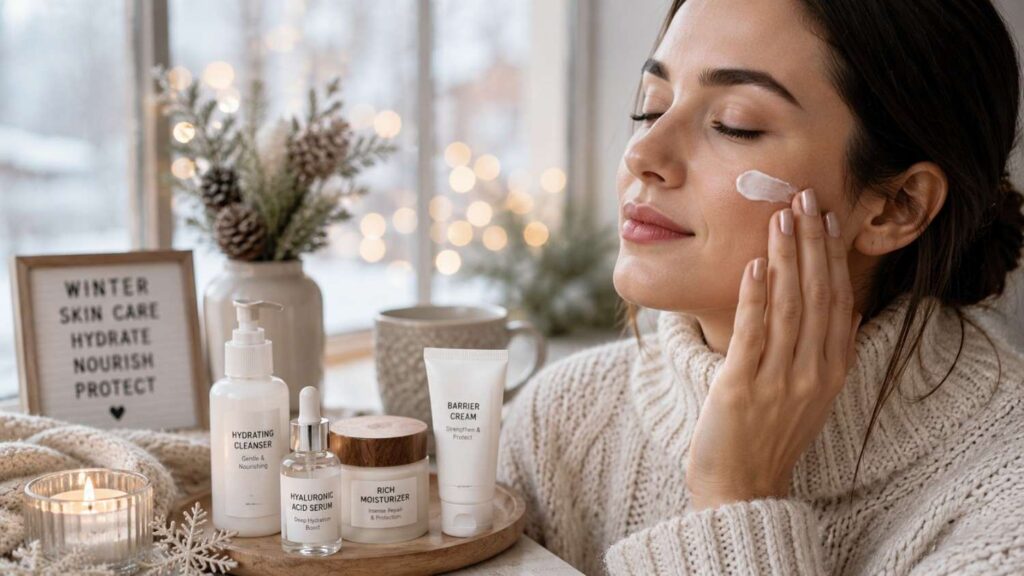
How to Treat Dry Skin in Winter: A Practical Dermatologist-Backed Guide
Winter can change the way normally comfortable skin looks and feels. Skin that feels balanced during warmer weather may suddenly become tight after washing, rough around the cheeks, flaky on the legs, or itchy beneath winter clothes. These changes are not caused by cold temperatures alone. Low humidity, indoor heating, repeated handwashing, harsh cleansing products, and long hot showers can all contribute to seasonal moisture loss.
The medical term for dry skin is xerosis. Mayo Clinic explains that dry skin can look or feel rough, itchy, flaky, or scaly, and identifies cold or dry weather, excessive bathing, harsh soaps, and indoor environmental conditions among common contributors. Most uncomplicated dry skin responds to improved moisturising and changes in everyday bathing and skincare habits.
Understanding how to treat dry skin in winter therefore requires more than finding a heavily marketed moisturiser. An effective strategy reduces avoidable irritation, improves the way moisturiser is used, protects vulnerable areas such as the hands and lips, and makes sensible seasonal changes to the surrounding environment. This guide explains those steps in enough detail for beginners while also helping experienced skincare users understand why familiar products may need to be adjusted when winter arrives.
How to Treat Dry Skin in Winter Step by Step
Understanding how to treat dry skin in winter becomes much easier when the process is reduced to a few repeatable actions. You do not need an elaborate ten-step routine. The foundation consists of gentle cleansing, immediate moisturising, frequent reapplication where necessary, and protection from environmental triggers. Each step supports the others. Gentle washing reduces unnecessary stripping, moisturising slows water loss, and environmental protection prevents the skin from becoming dry again as quickly.
For additional practical guidance, the American Academy of Dermatology outlines several dermatologists’ dry skin tips that support these basic winter-care habits.
A useful winter skincare routine should also fit comfortably into normal daily life. An ointment may provide excellent occlusion, but if it feels too greasy to use at work, you may apply it inconsistently. In that case, a cream can be used during the day while a thicker ointment is reserved for bedtime or particularly dry patches. Similarly, keeping hand cream beside the sink is often more effective than owning an excellent product that remains inside a bathroom cabinet.
Consistency is more valuable than constantly changing products. Give a simple routine enough time to reveal whether it is improving comfort unless a product clearly causes a rash, persistent burning, swelling, or worsening irritation. Mild winter xerosis often responds to straightforward changes. Severe inflammation, deep cracks, signs of infection, intense itching, or persistent symptoms require a different approach and may need medical evaluation. The step-by-step routine below is therefore designed for ordinary seasonal dryness rather than as a replacement for diagnosis or prescribed treatment.
Step 1: Change the Way You Shower
Begin with water temperature and shower duration. Use comfortably warm rather than very hot water, and avoid remaining in the shower simply because the heat feels pleasant. Dermatology guidance for dry skin commonly recommends shorter bathing periods, with the AAD advising approximately five to ten minutes. This gives you enough time to cleanse while limiting prolonged exposure to heat and water.
Next, reconsider your cleanser. Use a gentle fragrance-free product and focus it on areas that actually require cleansing. The NHS explains that ordinary soaps and shower gels can dry the skin and notes that emollient-based soap substitutes may be useful for some people with dry-skin conditions. Your needs will naturally differ depending on exercise, sweating, work environment, and underlying skin concerns.
Finally, change how you dry yourself. Vigorous towel rubbing creates additional friction on skin that may already be irritated. Pat the skin gently until it is no longer dripping but still feels slightly damp. That remaining moisture creates the ideal opportunity for the next step: applying a suitable cream or ointment promptly.
Step 2: Moisturise While Your Skin Is Damp
Moisturising soon after washing is one of the most important habits in a winter skincare routine. The AAD recommends applying moisturiser after bathing and whenever the skin feels dry, while its handwashing guidance specifically recommends applying cream or ointment while the hands retain a little moisture. This approach helps reduce evaporation from freshly washed skin.
Smooth the product gently over the area instead of rubbing aggressively. A cream may provide enough support for moderate facial or body dryness, while thicker ointments can be reserved for knuckles, heels, elbows, or persistently rough patches. Reapplication matters as much as the first application. If your hands become tight after every wash, moisturise after every wash rather than waiting until bedtime.
Make regular use convenient. Keep a moisturiser near frequently used sinks, on your bedside table, or in your work bag. People with eczema or other diagnosed dry-skin conditions may need more frequent emollient use or additional prescribed therapy. NHS guidance notes that emollients can be applied frequently when managing dry or itchy skin.
Step 3: Improve Your Indoor Environment
Winter skincare does not stop at the bathroom door. Central heating, fireplaces, and other heat sources may create indoor conditions that make already dry skin feel less comfortable. A humidifier can add moisture to dry indoor air and is included among practical self-care measures discussed by Mayo Clinic for people experiencing dryness in low-humidity environments.
Use a humidifier strategically rather than assuming maximum humidity is better. A bedroom or home office where you spend many hours may be the most useful location. Follow the manufacturer’s cleaning instructions carefully because poorly maintained humidifiers can become contaminated. If your home already experiences dampness or high humidity, adding more moisture may create problems instead of solving them.
Direct heat should also be considered. Sitting close to a space heater, heating vent, or fireplace for long periods can leave exposed areas feeling increasingly tight. Aim for a comfortable indoor environment rather than excessive heat. Combined with appropriate clothing, regular moisturising, and sensible shower habits, small environmental changes can reduce one of the recurring triggers that causes skin to dry again after you have moisturised it.
What Is the Best Moisturiser for Winter Dry Skin?
There is no single moisturiser that qualifies as the best choice for every person. A useful winter moisturiser should provide enough protection for the severity of your dryness, feel comfortable enough that you will actually use it consistently, and avoid ingredients that repeatedly irritate your skin. Someone with mild tightness around the cheeks may need a very different formulation from someone whose hands or heels are cracked and painfully dry.
Texture is one of the easiest ways to narrow down the options. Lotions generally feel lighter and spread quickly, making them convenient for mild dryness or large body areas. Creams are richer and often provide a practical balance between moisturising performance and cosmetic comfort. Ointments are thicker and more occlusive, making them particularly useful for severely dry areas but sometimes less convenient during the daytime. NHS guidance distinguishes between these forms and notes that ointments are especially suitable for very dry skin.
Ingredient selection matters as well. Humectants can attract water toward the outer skin layer, while occlusive ingredients reduce evaporation and emollient components smooth the rough spaces between surface cells. Dermatology guidance commonly highlights ingredients such as glycerin, hyaluronic acid, petrolatum, mineral oil, dimethicone, and ceramides. However, a complicated formulation is not automatically superior. For sensitive winter skin, a straightforward fragrance-free cream or ointment that you tolerate well may be more useful than a highly scented product containing numerous active ingredients.
Cream vs Lotion vs Ointment
Lotions, creams, and ointments can all be described as moisturisers, but they differ considerably in texture and the amount of occlusion they provide. NHS guidance explains that lotions have a higher water content and are easier to spread, creams provide more moisturising effect, and ointments are greasier formulations suited particularly well to very dry or thickened skin.
| Product Type | Texture | Best Use | Relative Moisturising Level |
|---|---|---|---|
| Lotion | Light and easy to spread | Mild dryness, daytime, larger areas | Lower |
| Cream | Richer but comfortable | Moderate to very dry skin | High |
| Ointment | Thick and occlusive | Severe dryness, cracked areas, night use | Very high |
You do not have to choose one texture for your entire body. A cream may work well for your face and body during the day, while an ointment can be applied to cracked knuckles, heels, or elbows at bedtime. The AAD also generally favours creams or ointments over lotions when skin is significantly dry.
The best option is therefore not automatically the thickest product. It is the formulation that provides enough protection for the affected area while remaining practical enough for regular use.
Moisturising Ingredients Worth Looking For
Moisturisers work in different ways depending on their formulation. Humectant ingredients such as glycerin and hyaluronic acid help attract water toward the outer layers of the skin. Occlusive ingredients such as petrolatum, mineral oil, and dimethicone help slow water loss from the surface. Emollient components smooth rough skin and improve flexibility, which can make dry, flaky areas feel noticeably more comfortable.
The American Academy of Dermatology identifies several ingredients commonly found in products for dry skin, including glycerin, hyaluronic acid, petrolatum, mineral oil, dimethicone, jojoba oil, shea butter, and lanolin. Ceramides are another useful ingredient category and are commonly included in barrier-focused moisturising creams.
Ingredient lists should still be interpreted in context. A product containing a fashionable ingredient is not automatically suitable for every person, and sensitive skin may react to botanical extracts, preservatives, fragrance, or other components. Focus first on performance and tolerance. If a moisturiser repeatedly stings, produces a rash, or makes redness worse, discontinue it and consider professional advice if the reaction persists.
Choose Fragrance-Free Products
Fragrance can become an unnecessary source of irritation when skin is already dry, cracked, or sensitive. The American Academy of Dermatology repeatedly recommends fragrance-free products for people managing dry or sensitive skin. This applies not only to moisturisers but also to cleansers, body products, and hand creams that may be applied several times each day.
Pay attention to labelling. A product described as “unscented” is not necessarily the same as one labelled “fragrance-free.” Dermatology guidance notes that some unscented products may contain fragrance ingredients that mask other odours even though the finished product does not have a noticeable scent. For reactive skin, “fragrance-free” is therefore a more useful starting point.
Even fragrance-free products are not guaranteed to suit everyone. Preservatives, active ingredients, botanical extracts, or other formulation components can occasionally cause irritation. Introduce new skincare gradually instead of replacing your entire routine in one day. That makes it easier to identify which product is responsible if stinging, itching, or redness develops.
Build a Winter Skincare Routine for Face, Body, and Hands
A practical winter skincare routine should recognise that different areas of the body face different types of environmental stress. Facial skin is regularly exposed to wind, temperature changes, sunscreen, makeup, and potentially drying active ingredients. The arms and legs may become dry because of hot showers and friction from clothing. Hands experience repeated washing, detergents, cold air, and physical work. Lips can become chapped rapidly because they have a comparatively delicate protective surface.
For that reason, using one product in exactly the same way everywhere is not always the most effective strategy. A comfortable facial cream may work well underneath sunscreen, while the legs might need a richer body moisturiser. Hands may require reapplication several times during the day, particularly after washing. A petrolatum-based ointment that feels too heavy for your entire face may be ideal for rough knuckles or heels before bedtime.
The order of your routine also affects results. Cleanse gently, moisturise promptly, and protect exposed skin before leaving home. Broad-spectrum sunscreen remains important during winter because ultraviolet exposure continues even when temperatures are low. Protective clothing and gloves can reduce direct exposure to wind and cold. By adjusting the routine according to body area, you avoid both under-treating severely dry areas and unnecessarily coating comfortable skin with products that are richer than it needs.
| Winter Dry Skin Trigger | Skin Par Possible Effect | Article Mein Mentioned Context |
|---|---|---|
| Cold outdoor air | Moisture loss aur dryness | Cold weather skin se moisture loss ko increase kar sakta hai |
| Low indoor humidity | Skin tight, rough ya flaky feel ho sakti hai | Heated indoor environments mein humidity kam ho sakti hai |
| Indoor heating | Skin ki moisture reduce ho sakti hai | Central heating aur fireplaces winter dryness mein contribute kar sakte hain |
| Hot showers | Dryness aur irritation increase ho sakti hai | Long, hot showers avoid karne ki recommendation |
| Harsh cleansers | Skin barrier aur natural oils affect ho sakte hain | Mild, fragrance-free cleanser prefer karne ka advice |
| Excessive bathing | Skin dryness worsen ho sakti hai | Excessive bathing common contributor ke طور par mentioned hai |
| Aggressive scrubbing | Irritation aur dryness barh sakti hai | Dry/flaky skin ko aggressively scrub karne se avoid karna |
| Fragranced products | Sensitive dry skin mein irritation | Fragrance-free products choose karne ki recommendation |
Dry Face in Winter
Facial dryness may appear as tightness immediately after cleansing, rough patches on the cheeks, visible flakes around the mouth, increased sensitivity, or makeup that catches on uneven areas. Start with a gentle cleanser that removes sunscreen, makeup, excess oil, and daily debris without leaving the face stripped. If a cleanser worked comfortably in summer but now causes tightness, your skin’s seasonal requirements may have changed.
Apply a fragrance-free moisturiser after cleansing. If a lightweight lotion is no longer enough, switch temporarily to a richer cream. People using retinoids, exfoliating acids, acne treatments, or other potentially drying actives may also need to review frequency if irritation develops. Do not independently stop prescribed treatments without discussing the change with the clinician responsible for your care.
Complete the daytime routine with appropriate sun protection. The AAD recommends broad-spectrum, water-resistant sunscreen with SPF 30 or higher for exposed skin. Winter does not eliminate ultraviolet exposure, and reflected light can be important in snowy environments.
Dry Body and Legs
The shins, knees, elbows, forearms, and sides of the torso commonly become noticeably drier during winter. These areas may look dull or flaky and can feel itchy underneath clothing. Rather than immediately reaching for a scrub, begin by changing shower temperature and cleanser use. Visible flakes are often a sign that the surface needs gentler treatment and more consistent moisturising, not stronger mechanical exfoliation.
After showering, gently pat the body and apply a cream or ointment while the skin is still slightly damp. Creams are often practical for large body areas because they spread comfortably, while thicker ointments can be applied over particularly rough spots. NHS guidance explains that emollients form a protective layer over the skin and can be used to manage dry, itchy, or scaly conditions.
Clothing can either help or worsen the problem. Rough, scratchy fabrics may increase itching and friction. Softer layers worn directly against the skin can improve comfort. Persistent redness, severe itching, inflamed patches, or widespread scaling despite good skincare should be assessed rather than repeatedly treated as ordinary winter dryness.
Dry Hands and Lips
Hands are particularly vulnerable because they combine cold-weather exposure with frequent washing. Apply a fragrance-free hand cream or ointment after washing and whenever tightness returns. AAD guidance specifically recommends moisturising damp hands after washing, including the fingertips and surrounding nail areas. Keeping a tube beside the sink can turn this recommendation into an automatic daily habit.
Wear suitable gloves outdoors and protective gloves for wet household tasks when appropriate. Repeated exposure to water, detergent, cold wind, and friction can make cracked knuckles difficult to heal. A thicker ointment may be particularly helpful before bedtime when greasiness is less inconvenient. Deep cracks, bleeding, swelling, warmth, discharge, or worsening pain deserve assessment because broken skin can become infected.
Lips also need regular protection. A plain petroleum jelly or a simple lip balm that does not sting can help reduce moisture loss. Reapply after eating, drinking, or spending extended time outdoors. Try not to lick chapped lips repeatedly because evaporation of saliva may leave them feeling even drier afterward.
Related Articles
Common Winter Dry Skin Mistakes to Avoid
Many cases of persistent winter dryness are not caused by a lack of skincare products. Instead, the skin may be exposed to an irritating routine throughout the day while moisturiser is expected to repair all the resulting damage at night. Someone might apply an excellent cream twice daily but still take very hot showers, exfoliate repeatedly, use fragranced body wash, sit beside a heater, and wear scratchy clothing against already sensitive skin.
Another common mistake is introducing several new products at the same time. When dryness becomes uncomfortable, it is tempting to purchase a new cleanser, toner, serum, face oil, exfoliant, sleeping mask, and moisturiser simultaneously. If the skin then becomes better or worse, it is almost impossible to determine which change was responsible. A simpler routine provides a useful baseline and makes individual product reactions much easier to recognise.
People also often treat flaking as a surface problem that must be removed immediately. Scrubbing can make the skin temporarily look smoother, but aggressive exfoliation may increase irritation and encourage another cycle of dryness. Supporting the barrier should come first. Gentle cleansing, moisturising, softer clothing, and fewer irritating ingredients often improve flaking gradually without the need for forceful exfoliation. When scaling is pronounced or persistent, a medical condition such as eczema, psoriasis, or dermatitis may need to be considered.
Over-Exfoliating Dry or Flaky Skin
Visible flakes naturally create an urge to scrub the surface until it feels smooth. However, physical scrubs, rough washcloths, exfoliating gloves, cleansing brushes, and frequent peeling can aggravate skin that already has a weakened barrier. The temporary smoothness produced by exfoliation may be followed by increased redness, stinging, sensitivity, and another round of visible flaking.
Chemical exfoliants and retinoids can also become more difficult to tolerate when winter dryness develops. This does not mean everyone needs to abandon glycolic acid, salicylic acid, retinol, or other active ingredients for several months. Instead, monitor your skin closely. If a previously comfortable routine begins producing persistent burning or peeling, reducing frequency may provide enough relief.
Prescription treatments need additional care. Do not stop or substantially alter prescription acne, eczema, psoriasis, or other dermatological medicines solely because general skincare advice recommends reducing irritating ingredients. Ask the prescribing healthcare professional how to manage seasonal dryness while maintaining treatment benefits. The objective is controlled adjustment rather than unnecessary interruption of medically useful therapy.
Using Strong or Fragranced Products
Strong cleansing is not automatically effective cleansing. Deodorant soaps, heavily scented shower gels, and cleansers that leave the skin feeling extremely tight can be unnecessarily harsh during winter. The AAD advises gentle, fragrance-free skincare for dry skin, while Mayo Clinic identifies harsh soaps as a recognised contributor to dryness.
Fragrance can become particularly troublesome once the skin is cracked or inflamed. A product that caused no obvious reaction during summer may sting when applied to compromised winter skin. Because body moisturisers and hand creams are often used over large areas and reapplied frequently, choosing fragrance-free formulations reduces one potential source of repeated irritation.
Avoid judging products solely by one ingredient or marketing term, however. Formulation matters. Not every alcohol-containing product is inherently damaging, just as every botanical product is not automatically gentle. Observe what happens after repeated use. If a cleanser, moisturiser, or serum consistently causes burning, increased redness, itching, or worsening dryness, remove it from the routine instead of continuing because the label promises sensitive-skin benefits.
Ignoring Clothing and Environmental Irritation
Skincare discussions often focus on cleansers and moisturisers while ignoring materials that remain in contact with the body for most of the day. Rough wool, scratchy seams, tight synthetic clothing, and repeated friction can increase discomfort when the underlying skin is already dry. For eczema-prone or very sensitive skin, smooth and breathable fabrics can be considerably more comfortable. Mayo Clinic similarly advises avoiding rough, tight, or scratchy clothing for sensitive skin.
Outdoor conditions also matter. Cold wind may aggravate facial and hand dryness, while heated indoor spaces can create a different type of environmental stress. Gloves, scarves, and protective outer layers provide a physical defence that moisturiser cannot fully replace. If the same patch becomes red where a collar or scarf constantly rubs, changing the fabric or fit may be more useful than adding another skincare product.
Finally, consider direct heat. Sitting beside a heater or fireplace for long periods can make exposed skin increasingly uncomfortable. Winter dry skin is best managed as a combination of skincare, bathing habits, fabric choices, protection, and environment rather than a problem that exists only inside a moisturiser jar.
When Does Winter Dry Skin Need Medical Attention?
Most uncomplicated winter dryness improves when common triggers are reduced and moisturiser is used consistently. However, not every rough, flaky, or itchy patch is ordinary seasonal xerosis. Atopic dermatitis, psoriasis, allergic or irritant contact dermatitis, fungal infections, medication reactions, and other health conditions may produce symptoms that resemble dry skin. Persistent problems deserve more attention, especially when they do not respond as expected to basic care.
A useful way to evaluate progress is to ask whether the skin is becoming gradually more comfortable after one or two weeks of consistent gentle care. Mild dryness should generally respond to reduced hot-water exposure, fragrance-free moisturising, and protection from irritating conditions. When symptoms continue spreading, become more painful, interfere with sleep, or produce bleeding and open wounds, simply adding more cosmetic products is unlikely to address the underlying problem.
Medical assessment can clarify what is actually happening. A dermatologist or other qualified healthcare professional can look at the distribution and appearance of the affected skin, ask about detergents and skincare products, review medications, and decide whether prescription treatment or further investigation is required. Mayo Clinic notes that very dry skin may need professional treatment and that a serious skin disease can require prescription therapy. Seeking assessment at the right time is therefore an important part of responsible winter skincare rather than a sign that normal moisturising has somehow “failed.”
Warning Signs You Should Not Ignore
Arrange professional assessment when dry skin does not improve despite appropriate self-care or when symptoms become severe enough to interfere with daily activities. Mayo Clinic advises medical evaluation when dry skin persists despite self-care, produces significant inflammation, disrupts sleep, creates open sores or infection, or involves extensive peeling or scaling. These symptoms suggest that ordinary moisturising may not be sufficient.
Signs such as increasing warmth, swelling, pus, rapidly spreading redness, worsening tenderness, or deep painful cracks deserve particular attention because damaged skin can become infected. Repeated scratching may also create small wounds that allow further irritation or infection to develop. Intense itch that repeatedly prevents sleep should not simply be accepted as a normal part of winter.
Do not diagnose a persistent rash based only on photographs or general articles. Eczema, psoriasis, contact dermatitis, fungal conditions, and other problems can overlap in appearance. If a patch behaves differently from ordinary dryness, spreads despite appropriate care, or repeatedly returns in the same pattern, a professional diagnosis is more useful than continued trial-and-error skincare.
Dry Skin May Sometimes Be Another Condition
Persistent dryness can occur as part of dermatological conditions rather than existing as an isolated winter problem. Atopic dermatitis, for example, causes dry, itchy, inflamed skin and may worsen under certain environmental conditions. Psoriasis can produce thicker, scaly areas that require a different management plan. Contact dermatitis may develop when the skin reacts to substances such as fragrances, detergents, preservatives, or other products.
Dryness and itching may occasionally be associated with broader medical problems as well, which is another reason not to self-diagnose persistent symptoms indefinitely. A healthcare professional can consider the location, appearance, timing, accompanying symptoms, medications, and relevant medical history before deciding whether additional testing or treatment is appropriate.
Product reactions should also be considered. If symptoms repeatedly appear after introducing a particular moisturiser, cleanser, detergent, glove material, cosmetic, or fragrance, stopping the suspected trigger may be appropriate. When the cause remains uncertain, professional assessment can help distinguish uncomplicated xerosis from eczema, allergy, irritant dermatitis, infection, psoriasis, or another condition that needs targeted treatment rather than increasingly complex cosmetic skincare.
Quick Answer About How to Treat Dry Skin in Winter
The most effective winter dry skin treatment usually starts with protecting the skin from repeated moisture loss. Take shorter showers using comfortably warm rather than hot water, choose a gentle fragrance-free cleanser, and avoid aggressive scrubbing. After washing, gently pat the skin instead of rubbing it completely dry. Apply a moisturising cream or ointment while the skin still holds a little surface moisture. The American Academy of Dermatology recommends moisturising after bathing and whenever skin feels dry, while NHS guidance describes emollients as treatments that help trap moisture by forming a protective layer over the skin.
Product texture also matters. A lightweight lotion may be convenient for mild dryness, but very dry winter skin often benefits from a thicker cream or ointment. Hands generally need more frequent reapplication because water, soap, detergents, cold outdoor air, and repeated drying can continually disturb the skin barrier. The same principle applies to lips, elbows, shins, heels, and other areas that tend to become rough more quickly.
Finally, look beyond the products in your bathroom. Heated indoor environments may worsen dryness for some people, while cold wind and rough fabrics can increase irritation. A humidifier can be useful in genuinely dry indoor conditions, although it should complement rather than replace a proper moisturising routine. Persistent inflammation, severe cracking, bleeding, signs of infection, or symptoms that fail to improve with sensible self-care deserve medical assessment rather than endless product experimentation.
What Works Fastest?
One of the quickest practical changes is to improve when and how you moisturise. After showering, bathing, washing your face, or washing your hands, gently dry the skin but leave it slightly damp. Apply a fragrance-free cream or ointment immediately afterward. This helps create a protective layer that reduces evaporation from the outer surface. The AAD specifically recommends applying moisturiser to dry skin and using creams or ointments when greater moisturising support is needed.
When dryness is already severe, use a richer product on the areas that need it most. Ointments containing occlusive ingredients such as petrolatum can be especially useful on rough knuckles, heels, elbows, or patches that repeatedly crack. A cream may be more comfortable for broader daytime use because it provides substantial moisturising without always feeling as greasy.
Faster improvement also depends on stopping whatever keeps damaging the barrier. Applying moisturiser five times a day will be less effective if every morning begins with a long, very hot shower followed by harsh soap. Combine regular moisturising with gentler cleansing and reduced heat exposure instead of relying on one product to correct an otherwise irritating routine.
What Should You Avoid?
Begin by reducing habits that repeatedly strip or irritate the skin. Long hot showers, aggressive exfoliation, rough washcloths, heavily fragranced body products, and cleansers that leave the skin feeling unusually tight can all make seasonal dryness more difficult to manage. Mayo Clinic includes excessive bathing and harsh soaps among recognised causes of dry skin, while the AAD advises using gentle products when the skin is dry.
Fragrance deserves particular attention when skin is cracked, sensitive, or itchy. Dermatology guidance commonly recommends fragrance-free products because fragrance can irritate susceptible skin. “Unscented” is not necessarily identical to “fragrance-free,” since some unscented formulations may contain ingredients designed to mask other smells.
You should also be cautious about overusing potentially irritating active ingredients during a period of increased dryness. Retinoids, exfoliating acids, strong acne products, and repeated physical exfoliation may require seasonal adjustment if they cause persistent stinging or peeling. That does not mean every active ingredient must automatically be stopped in winter. The better approach is to reduce unnecessary irritation and seek professional advice before altering prescribed treatments.
Why Does Skin Become So Dry in Winter?
Winter dryness develops when the outer surface of the skin loses more water than it can comfortably retain. Healthy skin normally acts as a protective barrier between the body and the surrounding environment. When the balance of water and barrier lipids is disrupted, the surface becomes less flexible and may begin to feel tight, rough, itchy, or uncomfortable. Flakes can appear, fine lines may look more noticeable, and previously well-tolerated products can suddenly sting.
Cold temperatures, low humidity, and indoor heating can all contribute to winter dryness, as explained in this overview of winter dry skin causes from Harvard Health.
Several environmental pressures occur at the same time during winter. Outdoor conditions may be cold and dry, while heating systems can reduce comfort indoors by creating a warmer but relatively dry environment. People also spend longer periods inside heated homes, offices, and vehicles. Mayo Clinic identifies cold or dry weather and indoor heat among factors associated with dry skin, making seasonal changes an important part of understanding why symptoms appear.
Everyday habits can intensify these environmental effects. Long hot showers may feel particularly appealing when temperatures fall, but they can aggravate dryness. Repeated handwashing, harsh soaps, detergents, fragranced products, aggressive exfoliation, and friction from rough winter clothing can add further irritation. The result is often a cycle: skin becomes dry, itching encourages scratching or exfoliation, the barrier becomes more irritated, and additional products are introduced in an attempt to fix the problem. Breaking this cycle requires both adding moisture and reducing whatever repeatedly removes it.
| Body Area | Common Winter Concern | Recommended Care | Useful Product/Ingredient Focus |
|---|---|---|---|
| Face | Dryness, tightness, sensitivity | Gentle cleansing + moisturising | Fragrance-free moisturiser, ceramides, glycerin |
| Body | Flaking, roughness, dryness | Moisturise immediately after showering | Thick cream or ointment |
| Legs | Rough or flaky skin | Apply moisturiser while skin is damp | Petrolatum-based or rich moisturiser |
| Hands | Dryness from cold, water and frequent washing | Hand cream after washing + protective gloves | Thick hand cream, petrolatum |
| Lips | Dryness and irritation | Apply balm or petroleum jelly regularly | Petroleum jelly |
| Elbows & Knees | Thick, rough, very dry skin | Use richer moisturising products consistently | Cream or ointment |
| Sensitive/Irritated Areas | Burning, itching or increased sensitivity | Reduce irritating products and avoid aggressive exfoliation | Fragrance-free products |
Cold Air and Indoor Heating Reduce Moisture
Cold and dry conditions can make it more difficult for the outer skin layer to maintain comfortable hydration. Mayo Clinic lists cold or dry weather as a common contributor to xerosis, which helps explain why people who experience few problems in summer may notice substantial changes during winter. Indoor heating can compound the issue by creating long periods in environments where the air feels warm but dry.
Exposed areas tend to show the effects quickly. The face, hands, and lips regularly encounter cold air and wind, while the hands are also subjected to frequent washing. Meanwhile, areas such as the shins, elbows, and forearms can become flaky beneath clothing. Some people notice an “ashy” appearance, especially when surface flakes become more visible.
Environmental exposure cannot be completely avoided, but it can be managed. Gloves, scarves, suitable clothing, regular moisturising, and reasonable indoor humidity all reduce pressure on the skin barrier. A humidifier may be useful where indoor air is genuinely dry, although it is only one part of the solution. The most reliable strategy combines environmental protection with an appropriate skincare routine rather than expecting humidity alone to resolve the problem.
Hot Water and Harsh Cleansers Can Make Dryness Worse
A steaming shower may feel comforting on a cold morning, but prolonged exposure to hot water can contribute to the tight, itchy feeling that appears after bathing. Mayo Clinic identifies long, hot showers, excessive bathing, and harsh soaps as factors that can worsen dry skin. These habits can disturb surface oils and leave an already vulnerable barrier less able to retain moisture comfortably.
The American Academy of Dermatology recommends warm rather than hot water for people dealing with dry skin. It also advises keeping bathing relatively short rather than remaining under hot water for extended periods. Gentle cleansing is equally important. You generally do not need to cover every centimetre of the body with heavily foaming cleanser during every shower.
Pay attention to your skin immediately after washing. If it consistently feels unusually tight, stings when moisturiser is applied, or becomes visibly red, the cleansing routine may be too aggressive. Before purchasing additional treatments, adjust water temperature, shower duration, cleanser type, cleanser quantity, and moisturiser timing. These basic changes often address the underlying source of repeated irritation more effectively than continually adding new products.
Frequently Asked Questions About How to Treat Dry Skin in Winter
People searching for guidance on winter dryness usually want practical answers that can be applied immediately. Common concerns include how quickly skin can recover, how often moisturiser should be used, whether petroleum jelly is helpful, whether a humidifier is worth using, and whether popular active ingredients such as retinol should be stopped when the weather changes. These are sensible questions because small details can make a routine considerably more effective.
The answers below follow the same core principles used throughout this guide. Reduce unnecessarily hot water, use gentle cleansing, moisturise promptly, reapply according to need, choose richer textures where appropriate, and protect areas exposed to cold weather or repeated washing. These measures address uncomplicated seasonal dryness rather than attempting to treat every possible rash or medical condition.
Remember that similar symptoms can have different causes. Mild tightness after showering is not the same as an inflamed eczema flare, and one flaky patch does not necessarily have the same cause as widespread scaling. Use these answers as general skincare guidance rather than a substitute for diagnosis. If redness, severe itching, pain, infection, cracking, or widespread symptoms persist despite good self-care, professional evaluation is more appropriate than repeatedly trying new home remedies.
What Is the Fastest Way to Get Rid of Dry Skin in Winter?
The fastest practical approach is to remove the main sources of irritation while improving moisturising at the same time. Replace very hot showers with warm water, shorten bathing time, stop aggressive exfoliation, and use a gentle fragrance-free cleanser. Immediately after washing, apply a cream or ointment while the skin is still slightly damp. These changes help interrupt the repeated cycle of cleansing, evaporation, and dryness.
For particularly dry areas, a thicker ointment may provide stronger occlusion than a lightweight lotion. You can use a comfortable cream during the day and reserve petrolatum-rich or similarly heavy products for bedtime. If repeated handwashing is the primary cause, moisturising after every wash may produce a greater improvement than adding additional facial skincare.
Do not expect severe dryness to disappear after one application. Fast improvement means immediately removing avoidable triggers and then supporting the skin consistently. Painful cracks, significant inflammation, bleeding, open sores, or signs of infection require medical advice rather than attempts to accelerate healing with more cosmetic products.
How Often Should I Moisturise Dry Skin in Winter?
There is no single number that suits everyone. Moisturiser should generally be applied after bathing and washing and then reapplied whenever the skin begins to feel dry. NHS guidance notes that emollients can be used frequently for dry or itchy skin conditions, while dermatology recommendations encourage moisturising whenever dryness returns.
Frequency should also vary according to the area. Your face may remain comfortable with morning and evening moisturising, while hands might require cream after every wash. Shins, elbows, or heels may benefit from an additional evening application, especially when a heavier ointment is being used. Instead of following an arbitrary number, pay attention to when tightness, itching, or flaking begins to return.
People using prescription topical medicines should follow the instructions supplied by their healthcare professional and ask how emollients should be spaced around medicated products. If even very frequent moisturising produces little improvement, increasing the quantity endlessly may not solve the problem. Persistent symptoms should be assessed for another cause.
Does a Humidifier Help Winter Dry Skin?
A humidifier can help when indoor air is genuinely dry because it increases moisture in the surrounding environment. Mayo Clinic discusses humidifiers as an option for people dealing with dryness in low-humidity indoor spaces, particularly during periods when heating is being used regularly.
However, a humidifier should support your skincare routine rather than replace it. You still need appropriate bathing habits and direct moisturising because the outer skin barrier requires protection regardless of room humidity. Avoid assuming that extremely high indoor humidity is better. Excess moisture can contribute to household dampness, so the objective is a comfortable environment rather than maximum humidity.
Maintenance also matters. Clean the appliance according to the manufacturer’s directions and change water as recommended. A neglected humidifier may become contaminated. If your home already feels humid or has mould or condensation problems, adding extra moisture may be inappropriate. In that situation, focus on moisturising, gentler washing, and reducing excessive direct heating.
Is Vaseline or Petroleum Jelly Good for Dry Skin?
Petroleum jelly can be very useful for dry skin because petrolatum forms an occlusive layer that reduces water loss from the surface. The AAD includes petroleum jelly and petrolatum-containing products among options used for dry skin, making them particularly suitable for rough knuckles, chapped lips, heels, elbows, and other areas where strong occlusion is helpful.
A practical method is to apply a small amount while the skin is slightly damp or layer it over a moisturising cream. This provides hydration underneath while the occlusive layer reduces evaporation. Some people find petrolatum too greasy for daytime facial use, but that does not reduce its usefulness on smaller, severely dry areas or as an overnight treatment.
Petroleum jelly cannot treat every rash. Areas that are infected, severely inflamed, oozing, or caused by conditions requiring medication need appropriate assessment. If you are unsure why the skin is cracking or scaling, obtaining a diagnosis is safer than assuming that additional occlusion will fix the underlying problem.
Why Does My Skin Itch More in Winter?
Itching often increases when the outer layer of the skin becomes dry, rough, and irritated. Cold or dry weather and heated environments can contribute to moisture loss, while long hot showers and harsh cleansers may create additional irritation. Mayo Clinic identifies itching as a common symptom of dry skin, so improving barrier care can help reduce discomfort for many people.
The itch-scratch cycle can make the problem worse. Dryness creates itching, scratching damages the surface, and damaged skin can become even more sensitive and inflamed. Regular moisturising, soft clothing, cooler shower temperatures, and keeping fingernails short can reduce some of the factors that perpetuate this cycle.
Persistent or severe itching should not automatically be blamed on winter. Eczema, psoriasis, contact dermatitis, infections, medications, and other health problems can cause itching. Seek professional advice when itching is widespread, unexplained, repeatedly interrupts sleep, produces wounds from scratching, or continues despite an otherwise appropriate winter skincare routine.
Should I Stop Using Retinol During Winter?
You do not automatically need to stop using retinol just because winter has arrived. If your skin continues tolerating the product without persistent redness, burning, peeling, or excessive tightness, your existing schedule may remain appropriate. The issue is that a routine tolerated during humid summer weather may become more irritating once the skin is exposed to winter dryness.
When irritation develops, consider reducing frequency and strengthening the basic routine around the active product. Use a gentle cleanser, moisturise consistently, avoid combining too many exfoliating ingredients, and use daytime sun protection. Reducing unnecessary irritation often allows people to maintain a simplified active routine instead of abandoning every treatment.
Prescription retinoids require additional caution. If tretinoin or another prescribed retinoid is being used for acne or a dermatological condition, discuss major changes with the prescribing healthcare professional. They can decide whether frequency, formulation, moisturiser use, or application technique should be adjusted while preserving the purpose of the treatment.
Can Hot Showers Cause Dry Skin?
Long, hot showers can contribute to dry skin, particularly when they are combined with strong soap or vigorous scrubbing. Mayo Clinic identifies long hot showers, excessive bathing, and harsh soaps among factors that may cause or worsen xerosis. The AAD similarly recommends using warm rather than hot water when managing dry skin.
You do not need to take an uncomfortable cold shower. Choose pleasantly warm water and shorten the amount of time spent bathing. Apply cleanser only where necessary and avoid scrubbing simply to create a stronger sensation of cleanliness. When you finish, gently pat the skin instead of rubbing hard with a towel.
Follow immediately with moisturiser while a small amount of moisture remains on the skin. This turns bathing into an opportunity to hydrate and protect rather than allowing water to evaporate from an unprotected surface. If reducing shower heat noticeably improves post-shower tightness, you have identified an important contributor to your winter dryness.
Conclusion
Learning how to treat dry skin in winter is less about discovering a miracle product and more about building a routine that consistently reduces moisture loss and irritation. The most effective habits are simple enough to repeat every day: keep showers reasonably short, use warm rather than hot water, choose gentle fragrance-free cleansing products, moisturise while the skin remains slightly damp, and reapply whenever dryness returns. These steps address the basic conditions that commonly contribute to seasonal xerosis.
Product choice should then be adjusted according to the severity and location of dryness. Lightweight lotions may be suitable for mild symptoms, while creams provide more substantial everyday moisturising and ointments can protect extremely dry areas. Hands, lips, elbows, heels, and shins often require additional attention because of repeated washing, friction, environmental exposure, or naturally lower oil production. Indoor conditions and clothing choices can also influence how comfortable the skin feels.
Most uncomplicated winter dryness responds to consistent self-care, but knowing when to stop experimenting is equally important. Severe inflammation, persistent pain, bleeding, deep cracks, suspected infection, extensive scaling, or symptoms that do not improve may indicate eczema, psoriasis, dermatitis, or another condition requiring professional evaluation. The objective of winter skincare is not to use the largest number of products. It is to create a simple, sustainable environment in which the skin barrier can function comfortably.
Keep Your Routine Simple
When deciding how to treat dry skin in winter, establish the basics before adding specialised products. Use comfortably warm water, shorten showers, cleanse gently, and apply a fragrance-free moisturiser while the skin is still slightly damp. Repeat moisturising when necessary, particularly after handwashing. These small habits directly address several of the most common factors behind seasonal moisture loss.
Build optional skincare around that foundation rather than using it as a replacement. A hydrating serum may feel pleasant, but it cannot fully compensate for a cleanser that continually irritates your skin. Similarly, an expensive moisturiser will have limited value if it is applied only occasionally. A straightforward routine performed consistently is often more useful than an elaborate routine followed irregularly.
Adjust according to the body area. Use a comfortable cream where cosmetic feel matters, thicker ointment on stubborn dry spots, gloves when necessary, and a simple lip protectant outdoors. If a product repeatedly stings or produces worsening redness, simplify the routine again and reassess what your skin actually tolerates.
Know When to Seek Help
Self-care is appropriate for uncomplicated seasonal dryness, but it should produce gradual improvement. If skin remains severely itchy, painful, inflamed, cracked, or uncomfortable despite regular moisturising and gentler washing, contact a healthcare professional. Mayo Clinic advises evaluation when dry skin does not improve with self-care or when symptoms include significant inflammation, open sores, infection, or extensive scaling.
Seek attention sooner if broken skin becomes increasingly warm, swollen, tender, or produces discharge. These changes can indicate infection. Persistent rashes also deserve assessment because eczema, psoriasis, contact dermatitis, and other disorders may resemble ordinary winter dryness but require different treatment.
Professional care does not replace a good skincare routine. In many cases, moisturising and trigger avoidance remain important parts of treatment even when medication is required. The difference is that a clinician can identify the underlying condition and ensure the treatment matches the problem instead of relying indefinitely on trial and error.
